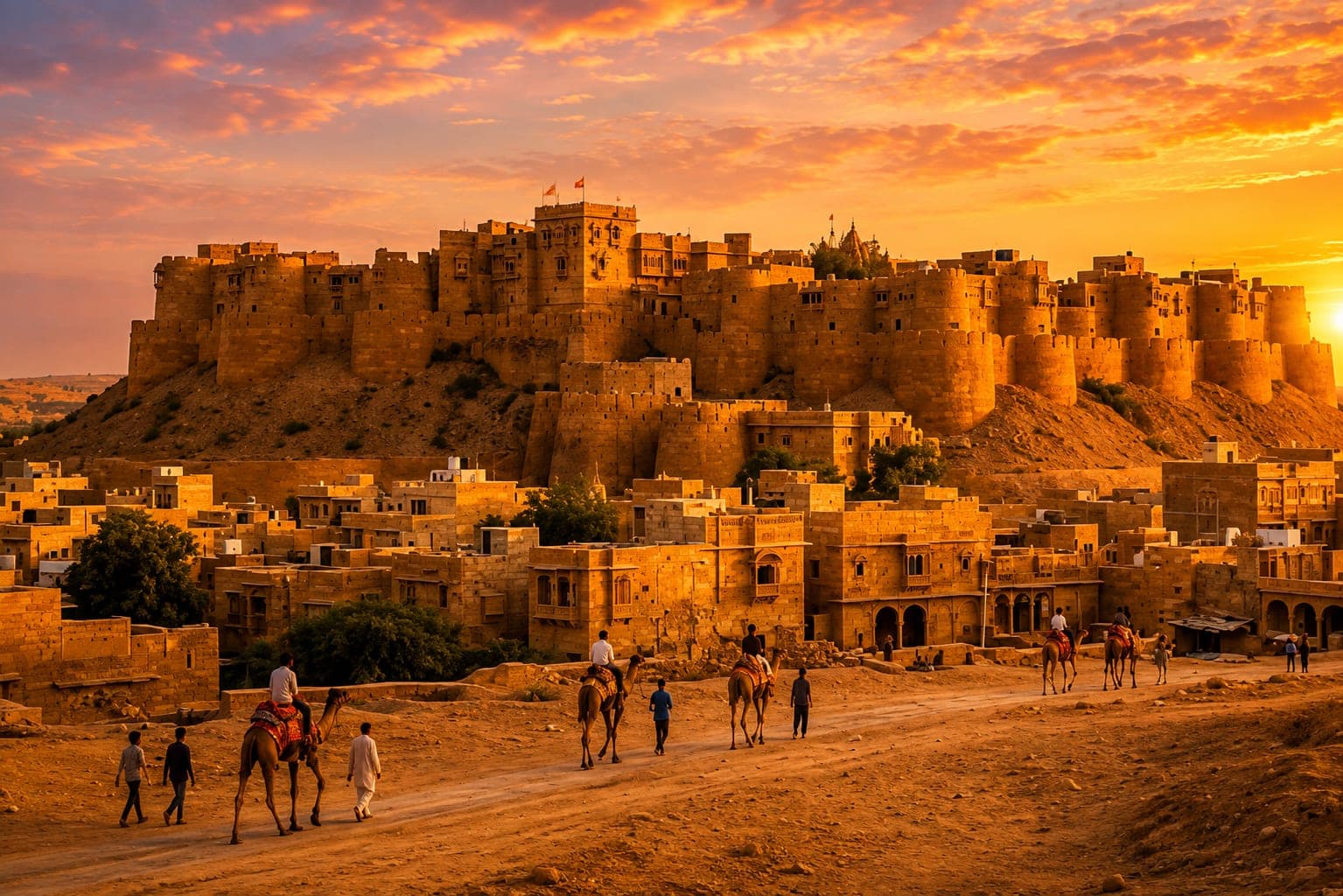
Delhi's own size works against long trips — by the time you've cleared the city's traffic, a "nearby" destination has often already eaten half your day. That's exactly why places to visit near Delhi within 200 km matter so much to NCR travellers: close enough to reach without losing a full day, far enough to feel like a real change of scene.
That said, "within 200 km" doesn't automatically mean every such destination suits a day trip. A flat highway route covers 150 km faster than a hill road covers 80. Road conditions and how much time you actually want at the destination matter more than the raw number on a map — which is why this list sticks to genuinely verifiable distances rather than rounding generously.
How Far Can You Realistically Travel from Delhi in a Day?
A day trip works comfortably up to about 120–150 km each way on a good highway — Neemrana or Panipat, for instance. Push past 150 km and it starts feeling rushed; Bharatpur or Alwar are still doable if you leave early, but an overnight stay is noticeably better.
Beyond roughly 180–200 km, treat it as an overnight or weekend trip — Sariska, Bhangarh or Haridwar all fall in this band. What matters isn't the number on the map, it's how much time actually gets spent at the destination versus in the car.
20 Best Places to Visit Near Delhi Within 200 KM
A few well-known names — Agra, Rishikesh, Nainital, Mussoorie among them — get mentioned constantly in "near Delhi" lists despite genuinely running well past 200 km by road; see our offbeat places near Delhi guide for those. This list sticks to the criterion seriously, so it leans toward Haryana and Rajasthan's NCR-adjacent belt instead.
Surajkund
Known for the annual Surajkund Crafts Mela each February, plus an ancient stepped reservoir and low Aravalli hills — one of the closest genuine outings from Delhi. Roughly 25 km, under an hour. Half a day outside mela season. Suits families and first-timers. Check mela dates if that's your reason for visiting — it's seasonal.
Sohna
Aravalli hills southwest of Gurugram, known for natural hot springs (Sohna Kund) and a noticeably cooler, greener landscape than the plains. About 55 km, roughly 1.5 hours. Half or full day. Good for couples wanting a short hill-adjacent escape. Weekday visits avoid the weekend crowd at the springs.
Damdama Lake
A natural Aravalli lake near Sohna, popular for boating, camping and light adventure like rappelling on the surrounding terrain. Roughly 65 km, 1.5–2 hours. Day trip or an overnight resort stay. Suits friends wanting outdoor activity over sightseeing. Weekends get busy — weekdays are noticeably quieter.
Sultanpur National Park
A genuine bird sanctuary near Gurugram, drawing migratory species through winter alongside resident waterfowl year-round. About 50 km, under 1.5 hours. Half a day is enough. Suits birdwatchers and families with older children. Winter mornings offer the best sightings — carry binoculars if you have them.
Panipat
Its place in Indian history comes from three major battles fought here in 1526, 1556 and 1761, marked today by sites and a small museum. Roughly 95 km, about 2 hours. A day trip is genuinely enough. Suits history-minded families. Combine with Kurukshetra for a fuller history day.
Kurukshetra
Associated with the Bhagavad Gita, with Brahma Sarovar and the Jyotisar site drawing pilgrims and history-interested visitors. About 160 km, 3–3.5 hours. Day trip if you leave early. Suits pilgrimage travellers. Time Brahma Sarovar for early morning or evening light.
Karnal
Named for its association with Karna from the Mahabharata, with Karna Lake as the town's main recreational spot. Roughly 130 km, 2.5–3 hours. A day trip suits it well. Suits travellers wanting a low-key, uncrowded stop. Works better as a stop within a longer route than a standalone destination.
Meerut
Holds a specific place in Indian history as where the 1857 rebellion against British rule first broke out, with a few markers around the old cantonment area. About 70 km, under 2 hours. A half or full day is enough. Suits history-interested travellers over families seeking activities. Worth combining with nearby towns rather than visiting alone.
Rewari
A Haryana town with a long-standing brass utensil industry and a local connection to Rao Tula Ram, a key 1857-uprising figure. Roughly 80 km, under 2 hours. Half a day covers it. Suits travellers with a specific interest in regional history. A modest stop best paired with the surrounding countryside.
Neemrana
A well-known heritage fort-turned-hotel — one of the most complete short-getaway experiences on this list despite being genuinely close to Delhi. Roughly 120 km, 2–2.5 hours. Day trip works, but an overnight fort stay is the fuller experience. Strongly suits couples. Book ahead — weekend availability is genuinely limited.
Alwar
Combines the Bala Qila hill fort and City Palace complex with access to Sariska, making it both a destination and a base for the wider district. About 160 km, 3–3.5 hours. An overnight lets you pair it with Sariska or Siliserh. Suits history-focused families.
Sariska
A genuinely quieter tiger-reserve experience than Rajasthan's more famous parks, with Kankwari Fort inside the reserve adding a heritage layer. Close to 200 km, roughly 4 hours. An overnight suits it far better than a rushed day trip. Suits wildlife enthusiasts. Closes for monsoon, roughly July–September.
Bhangarh
17th-century ruins with a well-known "haunted" reputation in popular folklore — a claim the Archaeological Survey neither confirms nor comments on, but one that draws steady curious visitors regardless. Roughly 200 km, similar range to Sariska. Best combined with an Alwar or Sariska overnight; the site closes before sunset.
Siliserh Lake
A lake near Alwar with a former royal hunting lodge, now the Siliserh Lake Palace heritage hotel, plus boating on the lake itself. Roughly 170 km, about 3.5 hours. Best combined with an Alwar or Sariska overnight. Suits couples wanting a quieter, scenic stop.
Tijara
A smaller heritage town near Alwar, known for a notable Jain temple and a quieter character than Alwar itself. About 160 km, roughly 3 hours. Best as an add-on to an Alwar or Sariska trip for travellers who've covered Alwar's main sites already.
Deeg
Deeg Palace, near Bharatpur, is known for its elaborate water gardens and fountain system alongside its Rajasthani architecture. Roughly 190 km, 3.5–4 hours. Best paired with Bharatpur on the same overnight trip. Fountains aren't run year-round — check timing if that's why you're visiting.
Bharatpur
Keoladeo National Park's wetlands make it one of India's better birdwatching destinations, particularly for winter migratory species, with cycle-rickshaw rather than jeep-only safaris. Roughly 180 km, about 3.5 hours. An overnight suits it better than a rushed day trip, pairing naturally with Deeg.
Mathura
Krishna's traditional birthplace and one of India's major pilgrimage towns, centred on the Krishna Janmabhoomi complex, with a distinctly devotional atmosphere. Roughly 160 km, about 3 hours. Day trip, often combined with Vrindavan given the short distance between them.
Vrindavan
A cluster of temples — including the well-known ISKCON temple — draws Krishna devotees specifically, with a more contemplative pace than Mathura's busier circuit. About 170 km, usually paired with Mathura. See our weekend getaways from Delhi guide for how Mathura-Vrindavan fits into a broader weekend.
Haridwar
Sits just past this list's 200 km mark depending on route — commonly cited closer to 210–220 km — but close enough to include with that caveat. The evening Ganga Aarti at Har Ki Pauri is the main draw. An overnight is more comfortable than a rushed day trip. For genuine hill-station territory beyond this cutoff, see our hill stations near Delhi guide.
Best One-Day Trips from Delhi Within 200 KM
Surajkund, Sohna, Damdama Lake, Sultanpur National Park, Panipat, Karnal, Meerut and Rewari are all genuinely comfortable as day trips. Kurukshetra, Neemrana, Mathura and Vrindavan work too, provided you leave by early morning.
Best 2-Day Trips from Delhi Within 200 KM
Alwar, Bharatpur (paired with Deeg), and Sariska (paired with Bhangarh or Siliserh Lake) are all noticeably better with a second day — the drive alone leaves little real time at the destination otherwise. Haridwar, right at this list's edge, also benefits from the extra day.
Best Places Near Delhi Within 200 KM for Couples
Neemrana's fort stay and Siliserh Lake's lakeside heritage hotel are the strongest picks — built around atmosphere and privacy over a packed sightseeing list. Sohna and Damdama Lake offer a shorter, lower-commitment version of the same idea.
Best Places Near Delhi Within 200 KM for Families
Bharatpur and Sultanpur National Park give children a genuine wildlife experience without a long drive. Panipat and Kurukshetra combine easily for a history-focused family day, and Surajkund's crafts mela suits this too.
Best Places Near Delhi Within 200 KM for Nature and Wildlife
Sariska and Bharatpur are the clearest wildlife picks — a tiger reserve and a major bird sanctuary respectively. Sultanpur National Park adds a closer alternative for birdwatching. Damdama Lake and Sohna's Aravalli hills suit outdoor activity over structured sightseeing.
Best Places Near Delhi Within 200 KM for History and Culture
Neemrana, Alwar, Deeg, Bhangarh and Siliserh Lake cover Rajasthan's heritage and folklore; Mathura and Vrindavan cover pilgrimage culture; Panipat, Kurukshetra and Meerut cover distinct chapters of Indian history nearby.
Best Places Near Delhi Within 200 KM in Different Seasons
Summer
Sariska, Bharatpur and the Rajasthan heritage towns get genuinely hot — early mornings matter more than usual. Sohna and Damdama offer marginally cooler relief, not a dramatic escape.
Monsoon
Sariska and Bharatpur close for part of this season for the animals' breeding cycle, roughly July to September. Plains routes stay more manageable than hill roads, though heavy rain can still slow any drive.
Autumn
A strong window across nearly this list — clearer skies, cooler mornings, and the start of peak wildlife-sighting conditions at Sariska and Bharatpur.
Winter
Winter suits most of this list well, and is peak season for Sultanpur National Park and Bharatpur's migratory birds. Early-morning fog on Haryana's highways can slow departure.
How to Choose the Right Place Near Delhi
One day, under roughly 150 km: Surajkund, Sohna, Panipat, Karnal or Meerut. Two days: Alwar, Bharatpur or Sariska. Want hills: Sohna and Damdama Lake, the closest genuine option here. Want wildlife: Sariska or Bharatpur. Want history: Panipat, Kurukshetra or Meerut. Want a romantic stay: Neemrana or Siliserh Lake. Want family-friendly travel: Bharatpur, Sultanpur National Park or a Panipat-Kurukshetra combination.
How Much Does a Short Trip from Delhi Cost?
Exact costs shift too much with season, group size and accommodation choice for one reliable figure, but the factors stay consistent. Transport is the biggest lever for the closer day trips here — a shared or self-driven car costs less than a private vehicle. Accommodation matters more for overnight picks — a heritage stay like Neemrana's fort costs more than a standard hotel, which is part of what you're paying for. Food and activities (safari permits, boating) add a smaller but real amount. For an actual quote, our customised holidays team can put one together based on your dates and group size.
How to Plan a Short Trip from Delhi
Departure timing: Leave early for day trips — Delhi's own exit traffic eats real time. For overnight trips, a Friday evening start beats Saturday morning.
Self-drive vs hired vehicle: Self-driving suits nearly everything here, since almost none of it involves genuine hill roads.
Accommodation: Book ahead for Neemrana, Siliserh Lake and Bhangarh-adjacent stays — heritage-property inventory is limited and fills fast on weekends.
Weather and road conditions: Summer heat is a real factor across most of this list; routes are plains highways rather than hill roads, so travel time stays predictable.
Booking ahead: Two weeks is a reasonable minimum for weekend heritage stays; safari slots at Sariska or Bharatpur are worth booking as soon as dates are fixed.
Realistic planning: Don't chain more than two destinations into one day — Panipat and Kurukshetra work well together; a third usually means rushing all three.
Common Mistakes to Avoid
Picking a destination by distance alone, without checking whether it suits a day trip or needs an overnight stay — Sariska at nearly 200 km is a very different day trip than Sohna at 55 km.
Underestimating how much of a day trip is actually driving — by the time Delhi's own traffic clears, a 150 km destination can already be a 3-hour trip each way.
Trying to cover too many places in one day, which usually backfires — pick one primary destination and treat a second as optional.
Ignoring summer heat at Rajasthan's heritage sites — plan sightseeing for morning or late afternoon instead.
Leaving Delhi too late in the morning, since an hour's delay often means returning well after dark on unfamiliar roads.
Frequently Asked Questions
What are the best places to visit near Delhi within 200 km?
Neemrana, Alwar, Bharatpur, Sariska, Mathura and Vrindavan — a mix of heritage, wildlife and pilgrimage destinations that genuinely fit within the distance.
Which places near Delhi are best for a one-day trip?
Surajkund, Sohna, Panipat, Karnal, Meerut and Rewari are all comfortably doable in a single day.
Which places near Delhi within 200 km are best for couples?
Neemrana's heritage fort stay and Siliserh Lake's lakeside palace hotel are the strongest picks for a romantic short trip.
What are the best family destinations near Delhi?
Bharatpur and Sultanpur National Park for wildlife, Panipat and Kurukshetra for an easy history day, and Surajkund during its February crafts mela.
Which hill stations are near Delhi within 200 km?
Very few genuinely qualify — Sohna and Damdama Lake are the closest options here; most Himalayan hill stations run well past 200 km, covered in our hill stations near Delhi guide.
Which wildlife destinations can I visit near Delhi?
Sariska Tiger Reserve, Bharatpur's Keoladeo National Park, and Sultanpur National Park for birdwatching.
What are the best weekend trips from Delhi within 200 km?
Alwar with Sariska or Siliserh Lake, or Bharatpur with Deeg — see our weekend getaways from Delhi guide for more combinations.
Is it better to drive or book a travel package for a short trip from Delhi?
Self-driving suits most of this list, given how few genuine hill roads are involved. A planned itinerary makes more sense for an overnight combination like Alwar with Sariska, where accommodation and safari bookings benefit from being arranged together — our weekend getaways from Delhi hub lists current bookable options if you'd rather not plan it solo.
Final Thoughts
The right destination here comes down to how much time you actually have, whether you want a day out or a proper overnight change of scene, and what kind of trip you're after — wildlife, heritage, pilgrimage or simply a short drive out of Delhi. Match those honestly and this list holds up better than a generic roundup that doesn't check its own distance claims.
If you'd rather have a short trip planned around your dates — including combinations like Alwar-Sariska or Bharatpur-Deeg — our team at Shubh Mangaal Yatra, a Delhi-based travel agency, can put one together — get in touch and we'll help you plan it.