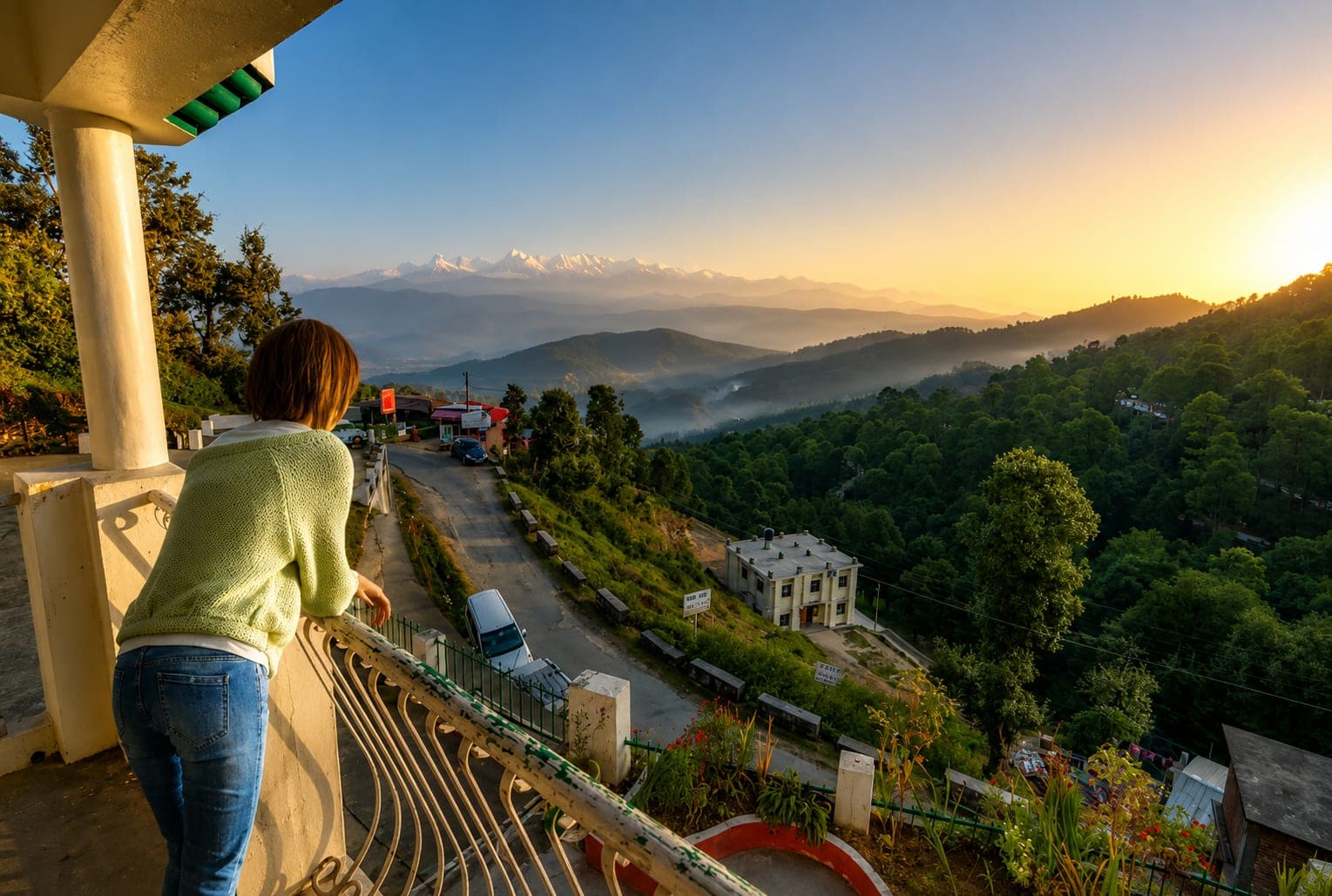
Delhi's summer heat and the pull of a genuine change in altitude make the hills the default answer whenever a short break comes up. The harder question is which hill station — Uttarakhand and Himachal between them offer more realistic options than most travellers ever actually compare.
Picking by distance alone is a common mistake. A destination that's technically "close" but sits on a slow mountain road can eat most of a weekend in transit, while a slightly farther one on a better road leaves more real time at the destination. Travel time, season, crowd levels and how many days you actually have all matter more than raw kilometres.
How Far Can You Realistically Travel from Delhi for a Hill-Station Weekend?
Two days suits destinations under roughly 300 km — Lansdowne, Nainital, Mussoorie, Dhanaulti and Rishikesh all fit, leaving a genuine day and a half at the destination after a Friday-night departure. Three days opens up the 300–450 km band — Mukteshwar, Almora, Binsar, Ranikhet, Shimla, Chail and Narkanda all work better with the extra day, since the drive alone can take the better part of one.
Beyond 450 km — Kausani, Chaukori and Tirthan Valley — four to five days is the honest answer. Two days at that distance means a full day lost to driving each way, against perhaps one real day at the destination — technically doable, but not a trip most people enjoy.
15 Best Hill Stations Near Delhi
Lansdowne
A quiet Garhwal cantonment town with pine forests and a slower pace than Uttarakhand's more commercial hill stations, kept uncrowded by its permit-controlled entry zones. It's roughly 270 km, about 6 hours from Delhi. Two days covers Bhulla Lake, the war memorial and forest walks. Quiet and low-key year-round outside peak monsoon. Best for couples wanting calm over activity. Confirm current entry rules for restricted zones before travel.
Mussoorie
Mall Road and Kempty Falls make Mussoorie one of the most accessible proper hill stations from Delhi, with valley views from Camel's Back Road on clear days. It's about 290 km, 6–7 hours. Two days works well, three with Dhanaulti nearby. Popular and often crowded on weekends — book ahead. Suits families well; see our Auli vs Mussoorie comparison for winter planning.
Nainital
Naini Lake, boating and a lakeside mall road make Nainital one of Uttarakhand's most visited hill towns — scenic but reliably crowded on weekends. It's roughly 300 km, 6–7 hours from Delhi. Two to three days, covered in our Nainital, Almora, Kausani & Corbett circuit — see our Nainital guide for more. Good for families. Arrive early on weekends to beat the crowds.
Mukteshwar
A quieter alternative to Nainital, built around orchard country rather than a lake-town crowd, with the Chauli Ki Jali cliff-edge viewpoint as the main draw. It's roughly 350 km, 7–8 hours from Delhi. Two to three days suits it, covered in our Corbett & Mukteshwar trip. Calm, low-crowd atmosphere. Best for couples. Best in spring and autumn.
Almora
A working Kumaon hill town with a genuine bazaar and Nanda Devi Temple, rather than a destination built primarily for visitors. It's about 380 km, 8–9 hours — a longer drive that rewards three days over two, as in our Bhimtal & Almora circuit. Moderate crowds, mostly domestic travellers. Suits history-minded travellers. Leave early to avoid arriving after dark on hill roads.
Binsar
Binsar Wildlife Sanctuary is a protected forest wrapped around a ridge, with a trail to the Zero Point tower where the Panchachuli and Nanda Devi ranges appear in one sweep. It's roughly 410 km, 9–10 hours from Delhi. Two to three days, covered in our Bhimtal & Almora circuit — see also our guide to offbeat places near Delhi. Genuinely quiet. Best outside monsoon, for travellers who'd rather walk a forest than a market.
Ranikhet
A cantonment hill station in the same Kumaon belt as Almora and Nainital, with the Chaubatia orchards and Himalayan viewpoints from the Kumaon Regimental Centre area, and a noticeably calmer atmosphere than its more commercial neighbours. It's roughly 360 km, about 8 hours from Delhi. Two to three days suits it. Quiet and pleasant, rarely crowded even in peak season. Good for families wanting a relaxed pace. Combine it with Almora or Kausani rather than visiting alone.
Kausani
Kausani earned its reputation from Gandhi, who called the view here among the finest Himalayan panoramas he'd seen, and the sweep from Nanda Devi to Trishul still holds up. It's about 430 km, 9–10 hours from Delhi. Three days is realistic given the distance, covered in our Kausani refresh & rejuvenate itinerary. Peaceful, low commercial development. Best for couples and photographers. Best in autumn and early winter for the clearest peaks.
Chaukori
Chaukori sits further east into Kumaon than most Delhi travellers venture, tea gardens on one side and Himalayan views on the other, with almost none of Nainital's infrastructure. At roughly 480 km, 10–11 hours, it's a genuine multi-day trip, covered in our Corbett, Chaukori & Patal Bhuvaneshwar itinerary. Among the quietest on this list. Suits travellers who've done the more familiar Kumaon towns already. Best for clear autumn or winter skies.
Shimla
Himachal's best-known hill station, with Mall Road, The Ridge and a toy-train ride giving it more to actually do than most entries here — though that also means the heaviest crowds on this list. It's about 340 km, 7–8 hours from Delhi. Two to three days, covered in our Shimla, Kufri & Chail itinerary — see our Best Time to Visit Shimla guide for season-by-season detail. Good for families. Book ahead for weekends and holidays.
Chail
Chail was Patiala's royal family's summer retreat, built after a dispute kept them out of Shimla, and still feels like a private hill town rather than a public one. It's around 340 km, 7–8 hours from Delhi via the Shimla road, pairing naturally with our Shimla, Kufri & Chail itinerary. Quiet relative to Shimla. Suits couples wanting a calmer version of the same trip. Best March–June and again in autumn.
Narkanda
Narkanda sits an hour past Shimla on the same road, but almost nobody continues that far, which is why apple orchards still define its economy rather than tourism. It's roughly 400 km, 9 hours from Delhi. Hatu Peak's viewpoint is the main walk, covered in our Narkanda, apple country itinerary. Quiet, low crowds. Best during the September–October apple harvest.
Dhanaulti
A small pine-forest town a short drive past Mussoorie, genuinely quieter than its better-known neighbour, with the Eco Park and Surkanda Devi temple trek as the main draws. It's roughly 300 km, about 7 hours from Delhi via Mussoorie. Two days is enough, extendable to three combined with Mussoorie itself. Quiet and low-key, popular mainly as an add-on rather than a standalone stop. Suits couples and families wanting forest walks over Mall Road crowds.
Rishikesh
Less a classic "hill station" than a Himalayan foothill town, but genuinely mountain-adjacent — Ganga Aarti at Triveni Ghat, ashrams, and white-water rafting on the same stretch of river. It's roughly 240 km, 5–6 hours from Delhi, the closest genuine mountain escape on this list, covered in our Rishikesh weekend getaway. Lively rather than quiet. Suits couples, groups and solo travellers. Plan around monsoon, when rafting is often suspended.
Tirthan Valley
Tirthan sits just outside the Great Himalayan National Park, with trout-filled rivers and forest trails rather than one big attraction — one of the quietest entries on this list despite growing popularity. It's about 500 km, 11–12 hours from Delhi, a genuine multi-day trip covered in our Tirthan Valley itinerary — see also our guide to weekend getaways from Delhi for how it compares to closer options. Suits couples and nature-focused travellers. Best March–June and September–November.
Best Hill Stations Near Delhi for a 2-Day Trip
Lansdowne, Mussoorie, Nainital, Dhanaulti and Rishikesh are the genuine two-day fits — all under roughly 300 km, leaving real time at the destination rather than in the car. Mukteshwar and Ranikhet work at a stretch with an early Friday departure, but feel more comfortable as three-day trips. Anything past 400 km on a two-day plan means more driving than destination time — not a trade worth making.
Best Hill Stations Near Delhi for a 3-Day Trip
A third day is what makes Almora, Binsar, Ranikhet, Shimla, Chail and Narkanda actually work, rather than becoming a long drive with barely a day to spare. It's also what turns single stops into combinations — Almora with Binsar, or Shimla with Chail and Narkanda — genuinely worthwhile circuits instead of a rushed single-destination dash.
Best Hill Stations Near Delhi for Couples
Chail and Mukteshwar offer boutique, low-key stays with real privacy and scenery over activity. Binsar and Chaukori go further in the same direction — genuinely secluded, minimal crowds, built around a view rather than a market. Kausani adds a scenic panorama with slightly more infrastructure for a comfortable but still peaceful stay.
Best Hill Stations Near Delhi for Families
Shimla and Nainital offer the most to actually do — toy trains, boating, easy Mall Road walks — without demanding hikes. Mussoorie and Dhanaulti work well together for families wanting an easy add-on day. Ranikhet's calmer pace suits families with older travellers or young children who'd struggle with a more activity-packed itinerary.
Quietest / Less-Crowded Hill Stations Near Delhi
Binsar, Chaukori, Ranikhet and Chail are consistently the quietest entries here — genuinely low footfall rather than just "less busy than Shimla." Chaukori in particular sees a fraction of the visitors Nainital or Mussoorie do, despite comparable scenery; Binsar and Chaukori are both part of our Kumaon tour options if you'd rather book than plan it yourself. For travellers who want to go further in this direction, our guide to offbeat places near Delhi covers several destinations that don't make even this list.
Best Hill Stations Near Delhi in Summer
Nearly everything on this list works in summer, which is exactly why it's the busiest season too. Shimla, Mussoorie and Nainital see the heaviest crowds; Mukteshwar, Ranikhet, Binsar and Chaukori offer the same relief from Delhi's heat with meaningfully fewer people. Book ahead regardless of which you pick — May and June are peak season everywhere on this list.
Best Hill Stations Near Delhi During Monsoon
Monsoon brings out genuine greenery across this entire belt, but it's also when the real caution is needed — hill roads toward Binsar, Chaukori and the Kumaon interior see a real increase in landslide risk, and Rishikesh's rafting is typically suspended when the Ganga runs high. If travelling in this window, keep dates flexible, check road conditions close to departure, and avoid remote stretches after heavy rain.
Best Hill Stations Near Delhi in Winter
Shimla, Narkanda and the higher parts of the Kumaon belt can see snowfall in peak winter, though timing and amount vary year to year and aren't guaranteed on any given trip. Lower-altitude towns — Mussoorie, Nainital, Dhanaulti, Ranikhet — stay reliably cold and clear without the same snow uncertainty. Pack proper layers regardless of destination, and check current road conditions before a winter hill drive.
Hill Stations Near Delhi: Quick Comparison
| Destination | Approx. travel time | Ideal trip length | Best for | Best season |
|---|
| Lansdowne | ~6 hours | 2 days | Couples, quiet | Oct–Jun |
| Mussoorie | ~6–7 hours | 2–3 days | Families | Mar–Jun, Oct–Nov |
| Nainital | ~6–7 hours | 2–3 days | Families | Mar–Jun, Oct–Nov |
| Mukteshwar | ~7–8 hours | 2–3 days | Couples | Mar–Jun, Oct–Nov |
| Almora | ~8–9 hours | 3 days | History-minded travellers | Oct–Jun |
| Binsar | ~9–10 hours | 2–3 days | Quiet-seekers, couples | Oct–Jun |
| Ranikhet | ~8 hours | 2–3 days | Families, quiet | Oct–Jun |
| Kausani | ~9–10 hours | 3 days | Couples, photographers | Oct–Feb |
| Chaukori | ~10–11 hours | 3–4 days | Quiet-seekers | Oct–Feb |
| Shimla | ~7–8 hours | 2–3 days | Families | Mar–Jun, Oct–Nov |
| Chail | ~7–8 hours | 2–3 days | Couples | Mar–Jun, Oct–Nov |
| Narkanda | ~9 hours | 2–3 days | Quiet-seekers | Sep–Oct |
| Dhanaulti | ~7 hours | 2 days | Families, couples | Mar–Jun, Oct–Nov |
| Rishikesh | ~5–6 hours | 2 days | Couples, groups | Oct–Mar |
| Tirthan Valley | ~11–12 hours | 3–4 days | Nature-focused couples | Mar–Jun, Sep–Nov |
How to Plan a Hill-Station Trip from Delhi
Friday night vs Saturday morning
Leaving Friday night avoids Saturday's NCR exit traffic and gets a full first day at the destination instead of losing it to the drive.
Self-drive vs driver
Self-driving suits closer destinations under roughly 300 km. Past that, or on genuine mountain roads, a hired vehicle with an experienced driver is safer and less tiring.
Accommodation
Book ahead for popular weekends — Shimla, Mussoorie and Nainital sell out fastest, but even quieter destinations have limited inventory in peak season.
Weather and packing
Hill towns turn cool by evening even in summer; carry a layer regardless of season, and proper waterproofs near monsoon.
Road conditions
Mountain roads take longer than raw distance suggests. Download offline maps for stretches with patchy network coverage, particularly in the Kumaon interior.
Booking timing
Book two to three weeks ahead for a summer or autumn weekend, and earlier for dates near a public holiday.
Realistic itinerary planning
Match your destination to your actual days off. One well-covered hill station beats two rushed ones — browse our weekend getaways from Delhi hub for ready-made options if that's an easier starting point.
Common Mistakes to Avoid
Choosing a destination that's too far for the days available is the most common one — a 500-km hill station on a two-day weekend means more driving than time actually spent there.
Underestimating mountain driving time is close behind. Four highway hours can become six or seven on switchbacks, especially after dark.
Overloading the itinerary — trying to see everything in a destination built for a slower pace — usually means seeing less, since rushing between stops eats into actual time at each one.
Ignoring weather, particularly for monsoon or winter travel, can turn a relaxed trip into a stressful one; check conditions the week of travel, not the week you booked.
Travelling without buffer time between the drive and any activity leaves no room for the traffic or road delays that hill routes regularly produce.
Booking accommodation purely to save money, without checking its location or reviews, is a common regret — a cheaper stay far from what you actually want to see rarely feels worth it.
Frequently Asked Questions
Which is the nearest hill station to Delhi?
Lansdowne and Rishikesh are among the closest genuine hill-station options, both realistically under 6 hours by road.
Which hill station near Delhi is best for a 2-day trip?
Lansdowne, Mussoorie, Nainital, Dhanaulti and Rishikesh all fit comfortably within two days.
Which hill station near Delhi is best for couples?
Chail, Mukteshwar and Binsar for privacy and scenery; Kausani for a more scenic panorama with slightly more infrastructure.
Which hill station near Delhi is best for families?
Shimla and Nainital offer the most activities; Mussoorie, Dhanaulti and Ranikhet suit a calmer family pace.
Which are the quietest hill stations near Delhi?
Binsar, Chaukori, Ranikhet and Chail are consistently the quietest on this list.
Which hill stations near Delhi are best in winter?
Shimla, Narkanda and the higher Kumaon towns can see snowfall; Mussoorie, Nainital and Ranikhet stay reliably cold and clear.
Which hill stations near Delhi are best during summer?
Nearly all of them work, though Mukteshwar, Ranikhet, Binsar and Chaukori offer the same relief from the heat with fewer crowds than Shimla or Mussoorie.
Can I visit a hill station from Delhi for just one weekend?
Yes, for anything under roughly 300 km — beyond that, a single weekend usually means more time driving than at the destination.
Final Thoughts
Fifteen hill stations is a lot of choice, but the decision usually comes down to distance versus quiet — the closer and more popular options are easiest to reach but busiest, while the quieter ones ask for an extra day in return for genuine calm.
If you'd rather have an itinerary built around your specific dates and group instead of piecing one together yourself, our team at Shubh Mangaal Yatra plans exactly these kinds of trips — get in touch and we'll help you decide.