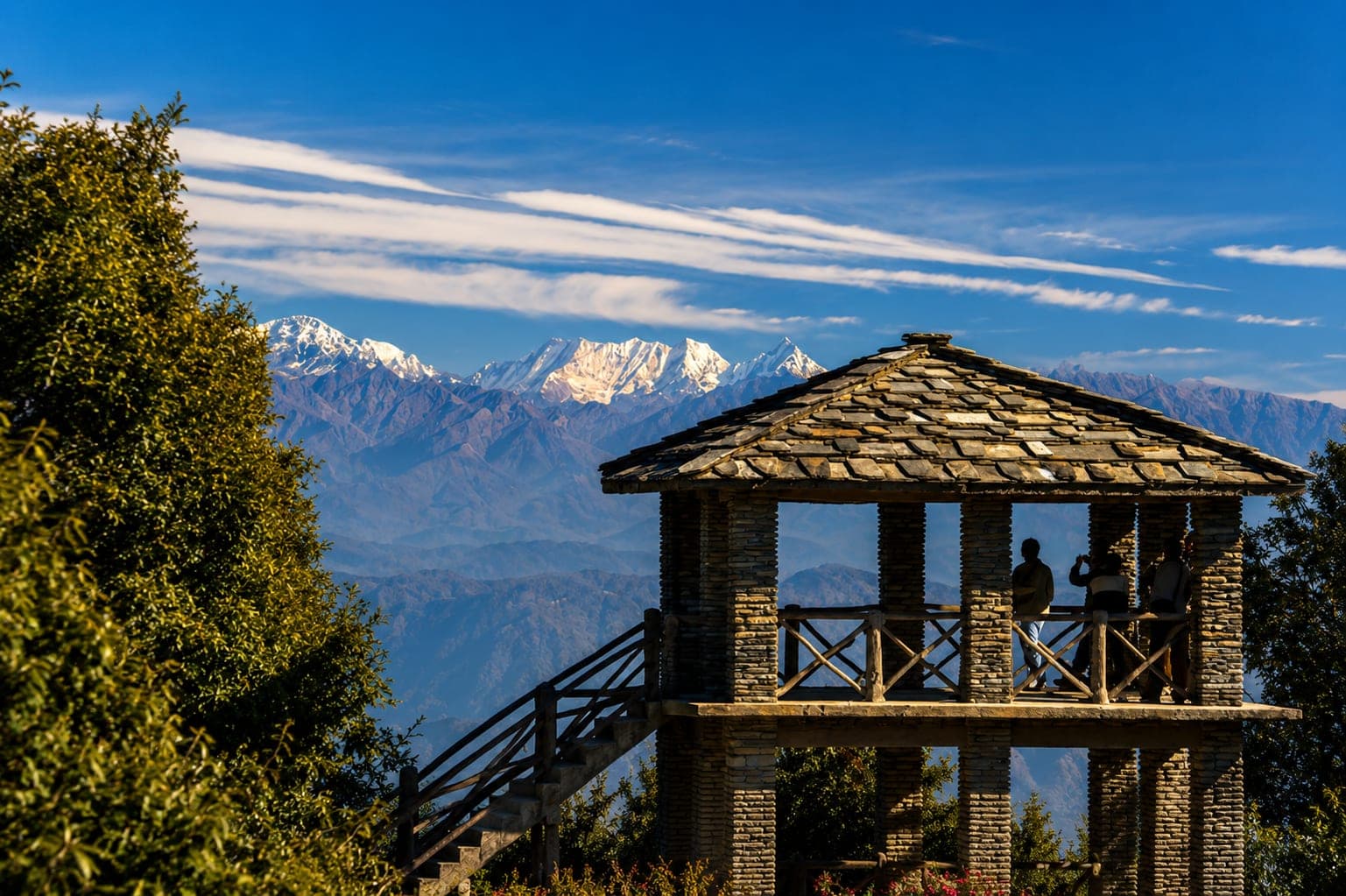
Delhi's usual weekend map — Manali, Mussoorie, Nainital, Shimla, covered in our hill stations near Delhi guide — gets more crowded every year, especially over a long weekend. Traffic on the main hill routes backs up for kilometres, hotel rates spike, and the quiet hill-town experience most people are chasing gets harder to find once you arrive. That gap between promise and delivery is why more Delhi and NCR travellers are now planning around offbeat places near Delhi instead.
An offbeat escape isn't necessarily further away — often it's a lesser-known town just past the crowded one everybody knows, on the same highway, minus the traffic at the entry point. This guide covers 15 such destinations within a realistic driving range of Delhi, with honest detail on distance, ideal trip length and who each place suits, built from how we actually plan trips at Shubh Mangaal Yatra.
What Makes a Place "Offbeat"?
"Offbeat" gets used loosely in travel writing, so it's worth being specific. A genuinely offbeat destination near Delhi usually shares three traits: fewer visitors relative to its appeal, limited large-scale hotel development, and a well-known mainstream destination close enough that most travellers pass right by.
Kasar Devi, twenty minutes from Almora, sees a fraction of the footfall Nainital's Mall Road gets on a single Saturday, despite sitting in the same district. That's the pattern worth looking for — not somewhere obscure, but somewhere the crowd hasn't caught up to yet, which is also why timing a visit matters as much as picking it.
15 Offbeat Places Near Delhi
Grouped roughly by region — Kumaon, Himachal's quieter valleys, and a couple of outliers — here are 15 offbeat places near Delhi worth building a trip around.
Binsar
Binsar Wildlife Sanctuary is a protected oak-and-rhododendron forest wrapped around a ridge, with a 2.5-km trail to the Zero Point tower, where the Panchachuli and Nanda Devi ranges appear in one sweep. It's roughly 410 km, 9–10 hours from Delhi [VERIFY FACT]. Two days suits it, ideally with our Bhimtal & Almora circuit. Best outside monsoon, for travellers who'd rather spend a day in a forest than a market.
Almora
Almora's cantonment-era bazaar and Nanda Devi Temple move at a working hill town's pace, not one dressed up for tourism. It's about 380 km, 8–9 hours from Delhi [VERIFY FACT]. Katarmal's Sun Temple and Chitai's Golu Devta shrine are short drives away, covered in our Bhimtal & Almora circuit. Two to three days, pleasant most of the year outside monsoon.
Mukteshwar
Mukteshwar sits above the Kumaon fruit belt, built around an old veterinary institute rather than a tourist strip. At roughly 350 km, 7–8 hours from Delhi [VERIFY FACT], it's one of the more accessible entries here. The Chauli Ki Jali cliff-edge viewpoint and orchard walks are the draw, covered in our Corbett & Mukteshwar trip. Two days, best in spring and autumn.
Jageshwar
Jageshwar Dham is a cluster of roughly 125 stone temples over a thousand years old, set inside a cedar forest — one of the twelve Jyotirlinga sites, far less visited than that status suggests. It's around 410 km, 9–10 hours from Delhi [VERIFY FACT]. Most pair it with Kasar Devi, as in our Kasar Devi & Jageshwar circuit — two days covers both. Winter mornings run genuinely cold.
Kausani
Kausani earned its reputation from Gandhi, who called the view here among the finest Himalayan panoramas he'd seen, and the sweep from Nanda Devi to Trishul still holds up. It's about 430 km, 9–10 hours from Delhi [VERIFY FACT]. Two to three days covers the viewpoints and tea estates, as in our Kausani refresh & rejuvenate itinerary. Best in autumn and early winter.
Chaukori
Chaukori sits further east into Kumaon than most Delhi travellers venture, tea gardens on one side and Himalayan views on the other, with almost none of Nainital's infrastructure. At roughly 480 km, 10–11 hours [VERIFY FACT], it's more a 3-day trip, covered in our Corbett, Chaukori & Patal Bhuvaneshwar itinerary. Best for clear autumn or winter skies.
Bhimtal
Bhimtal sits fifteen minutes from Nainital and gets a fraction of its traffic, built around a genuinely large lake with a small island temple. It's about 285 km, 6–7 hours from Delhi [VERIFY FACT] — the shortest drive on this list. A day or two is enough, or as a first stop before our Bhimtal & Almora circuit. Pleasant most of the year.
Munsiyari
Munsiyari is the outlier: at roughly 600 km, 13–14 hours from Delhi [VERIFY FACT], it belongs on a longer trip, not a weekend. What that distance buys is a close-up Panchachuli view and a start point for treks toward the Milam and Ralam glaciers, covered in our Corbett, Kausani & Munsiyari circuit. Three to four days minimum, best March–June or autumn.
Lansdowne
Lansdowne is a working cantonment town, still run partly by the Garhwal Rifles, and its permit-based entry to certain zones has kept it quieter than almost anywhere here. It's about 270 km, roughly 6 hours from Delhi [VERIFY FACT]. Bhulla Lake, the war memorial and Tip-in-Top's pine-forest walks fill two comfortable days. [VERIFY FACT: confirm current cantonment entry-permit rules before travel.]
Chail
Chail was Patiala's royal family's summer retreat, built after a dispute kept them out of Shimla, and still feels like a private hill town — including the world's highest cricket ground [VERIFY FACT]. It's around 340 km, 7–8 hours from Delhi via the Shimla road [VERIFY FACT], pairing with our Shimla, Kufri & Chail itinerary. Two to three days, best March–June and autumn.
Narkanda
Narkanda sits an hour past Shimla on the same road, but almost nobody continues that far, which is why apple orchards still define its economy. It's roughly 400 km, 9 hours from Delhi [VERIFY FACT]. Hatu Peak's viewpoint is the main walk, covered in our Narkanda, apple country itinerary. Best during the September–October harvest.
Tirthan Valley
Tirthan Valley sits just outside the Great Himalayan National Park's boundary — trout-filled rivers, forest trails, almost no large hotels — which has kept it quieter despite growing attention. It's about 500 km, 11–12 hours from Delhi [VERIFY FACT], a 3-day-minimum trip, covered in our Tirthan Valley itinerary. Best March–June and September–November.
Jibhi
Jibhi sits a short drive from Tirthan and shares its unhurried character — a small village built around a waterfall, wooden-architecture homestays and walking trails. At roughly 510 km, 11–12 hours from Delhi [VERIFY FACT], it's usually paired with Tirthan, as in our Jibhi & Tirthan Valley itinerary. Same March–June and September–November window.
Sangla Valley
Sangla Valley sits deep in Kinnaur, past where most Himachal-bound traffic turns toward Manali or Shimla, its apple orchards and the fort village of Kamru reflecting a distinctly Tibetan-influenced culture. It's around 570 km, 12–13 hours from Delhi [VERIFY FACT] — best suited to four or more days, covered in our Sangla Valley itinerary. [VERIFY FACT: confirm current road and weather status before travel.]
Kalpa
Kalpa sits across the valley from the Kinner Kailash range, close enough that the peaks fill the view from the village itself. It's around 600 km, 13–14 hours from Delhi [VERIFY FACT], usually reached via Sangla, as in our Kalpa itinerary. Four to five days for a proper Sangla–Kalpa circuit, best May–October.
Best Offbeat Places Near Delhi for a 2-Day Trip
For a genuine two-day window — leaving Friday night or early Saturday, back by Sunday — distance matters most. Bhimtal, Lansdowne and Mukteshwar are the strongest fits, realistically under 8 hours by road [VERIFY FACT] with enough to see unrushed. Almora and Chail work at a stretch. Skip anything past 400 km for a two-day plan — Munsiyari, Sangla and Kalpa all need more time.
Best Offbeat Places Near Delhi for a 3-Day Trip
A third day opens up combinations rather than single stops. Jageshwar with Kasar Devi and Binsar makes one Kumaon loop; Kausani with Chaukori a second. In Himachal, Chail with Narkanda covers two apple-country towns, and Tirthan with Jibhi does the same for valleys near the Great Himalayan National Park. Three days is also the realistic minimum for Chaukori and Tirthan-Jibhi alone.
Best Offbeat Mountain Getaways from Delhi
Most of this list sits in one of two belts — Uttarakhand's Kumaon region and Himachal's quieter valleys — and they suit slightly different travellers. Kumaon in particular deserves attention on its own terms, not as "the region next to Nainital." Almora, Binsar, Mukteshwar, Jageshwar, Kausani and Chaukori sit within a few hours of each other, share a similar altitude and climate, and because most Delhi travellers default to Nainital or head straight to Corbett, have stayed genuinely uncrowded.
What makes Kumaon interesting for slower travel is density without congestion — a temple town, a wildlife sanctuary, a viewpoint and a tea estate can sit within a single day's drive of each other, letting a five- or six-day trip move at an unhurried pace. It's built for a curated multi-stop itinerary rather than a single-destination weekend, which is how we plan most of our own Kumaon trips.
Himachal's quieter valleys — Tirthan, Jibhi, Sangla, Kalpa — work differently: each is more of a standalone destination reached via a longer drive, suited to travellers who'd rather settle into one place than move between several.
How to Choose the Right Offbeat Destination from Delhi
With fifteen options, the fastest way to narrow this down is by the trade-off that actually matters for your trip.
Travel time is the real constraint for most people — Bhimtal and Lansdowne sit under 300 km, while Munsiyari, Sangla and Kalpa run past 550 km and need a different trip length [VERIFY FACT]. Landscape is the next filter: Kumaon's temple towns suit quiet walks and history; Himachal's river valleys and high-altitude villages suit a more immersive setting.
Crowd levels vary too — Kausani and Chail are offbeat next to Nainital or Shimla, but still busier than Chaukori or Sangla. Weight your choice toward the harder-to-reach options if quiet matters more than convenience.
Match the destination to who's travelling: Bhimtal and Mukteshwar suit couples and short trips; Kumaon multi-stop circuits suit families; Tirthan, Jibhi, Sangla and Kalpa reward travellers comfortable with longer drives for real solitude.
Best Time to Visit Offbeat Destinations Near Delhi
Summer (April–June)
The most reliable season across nearly every destination here — temperatures across Kumaon and Himachal's mid-altitude towns stay comfortably below the plains, and roads are generally clear. It's also peak season, so book ahead for May–June travel.
Monsoon (July–September)
Genuinely the season to avoid for most of this list. Hill roads toward Kinnaur and the Munsiyari approach see a real increase in landslide risk, and cloud cover often blocks the mountain views that are the main reason to visit. Keep plans flexible and check road conditions the week you leave.
Autumn (October–November)
Arguably the best window overall — monsoon disruptions have passed, skies stay clear for the panoramas Kausani and Narkanda are known for, and crowds thin out. It's also apple-harvest season in Narkanda and Chail.
Winter (December–February)
Winter suits lower-altitude destinations like Bhimtal, Almora and Lansdowne well, with crisp days. Higher-altitude spots — Binsar, Chaukori, Sangla, Kalpa — can see snowfall and road closures, so confirm current conditions before finalising dates [VERIFY FACT].
How to Plan an Offbeat Weekend Trip from Delhi
Departure timing
Most destinations here are reached faster leaving Friday night than Saturday morning, avoiding Delhi-NCR's exit traffic.
Transportation
Self-driving works for the closer destinations — Bhimtal, Lansdowne, Mukteshwar. Past 400 km, or on sharper hill curves, a hired vehicle with a driver who knows the route is safer and less tiring — how nearly all of our own itineraries are run.
Accommodation
Offbeat destinations have fewer stays than mainstream hill stations, sometimes a handful of homestays rather than dozens of hotels. Book ahead for summer and autumn weekends, since limited inventory disappears fast.
Weather and packing
Even in summer, these destinations sit at an elevation where evenings turn cool — carry a layer regardless of season, and waterproof gear near monsoon months.
Road travel
Hill roads mean longer drive times than raw distance suggests, and mobile coverage drops through stretches of Kumaon and Kinnaur. Download offline maps beforehand.
Advance booking
Book accommodation and any vehicle two to three weeks ahead for a summer or autumn weekend, earlier for dates near a public holiday.
Realistic trip planning
Match your destination list to your actual days off — better to properly cover two Kumaon towns in three days than rush four. See our weekend getaways from Delhi hub for more short-trip options, or if you'd rather have this handled end to end, our customised holidays team plans exactly this kind of trip around your dates.
Common Mistakes to Avoid
Picking a destination by distance alone is the most common mistake — a 12-hour-each-way destination like Sangla or Munsiyari on a two-day weekend leaves almost no time at the place itself.
The second is assuming offbeat means empty year-round. Kausani and Chail, quiet next to Nainital or Shimla, still fill up on long weekends — book ahead regardless.
The third is underestimating hill-road driving time. Four highway hours can become six or seven on switchbacks after dark — build in buffer time rather than planning to the minute.
The fourth is skipping weather checks for higher-altitude spots like Binsar, Chaukori, Sangla and Kalpa, where conditions shift faster than plains forecasts suggest [VERIFY FACT].
Frequently Asked Questions
Are offbeat places near Delhi safe to visit?
Yes — all fifteen destinations here are established, regularly visited towns, not remote or undeveloped areas. Offbeat means quieter, not harder to reach safely. Standard hill-travel precautions around roads, altitude and weather still apply.
Which offbeat place near Delhi is best for a first-time visitor?
Bhimtal or Mukteshwar — both under 8 hours from Delhi [VERIFY FACT], with straightforward access and none of the longer commitment Kinnaur or far-Kumaon destinations need.
Do these destinations require permits?
Most don't. Lansdowne, a cantonment town, has zones with restricted vehicle access — confirm current entry rules before travel [VERIFY FACT]. None of the others need special permits for Indian travellers.
Is it better to self-drive or book a planned itinerary?
Self-driving works for the closer destinations. For longer routes into Kinnaur or far Kumaon, a planned itinerary with an experienced driver reduces fatigue and risk on unfamiliar mountain roads.
What's the best time of year overall for offbeat Himalayan destinations?
Autumn (October–November) offers the most consistent mix of clear skies, thinner crowds and stable roads across nearly every destination here, though summer is the safer bet if you can't stay flexible around monsoon disruptions.
How far in advance should I book an offbeat weekend trip from Delhi?
Two to three weeks ahead is a reasonable minimum for summer and autumn weekends, given limited stay inventory; long-weekend dates near public holidays deserve earlier planning.
Final Thoughts
The destinations on this list aren't obscure for the sake of being obscure — each earns its place through a specific reason to visit, whether that's Jageshwar's thousand-year-old temple cluster, Binsar's uninterrupted Himalayan panorama, or Kalpa's view of the Kinner Kailash range from the breakfast table. What they share is less noise: fewer crowds, a slower pace, and room to actually experience a place rather than photograph it and move on.
If you're weighing a few of these against each other, or want an itinerary built around your dates rather than a generic template, our team at Shubh Mangaal Yatra plans curated, private and small-group trips across most of the destinations covered here — get in touch and we'll help you pick.