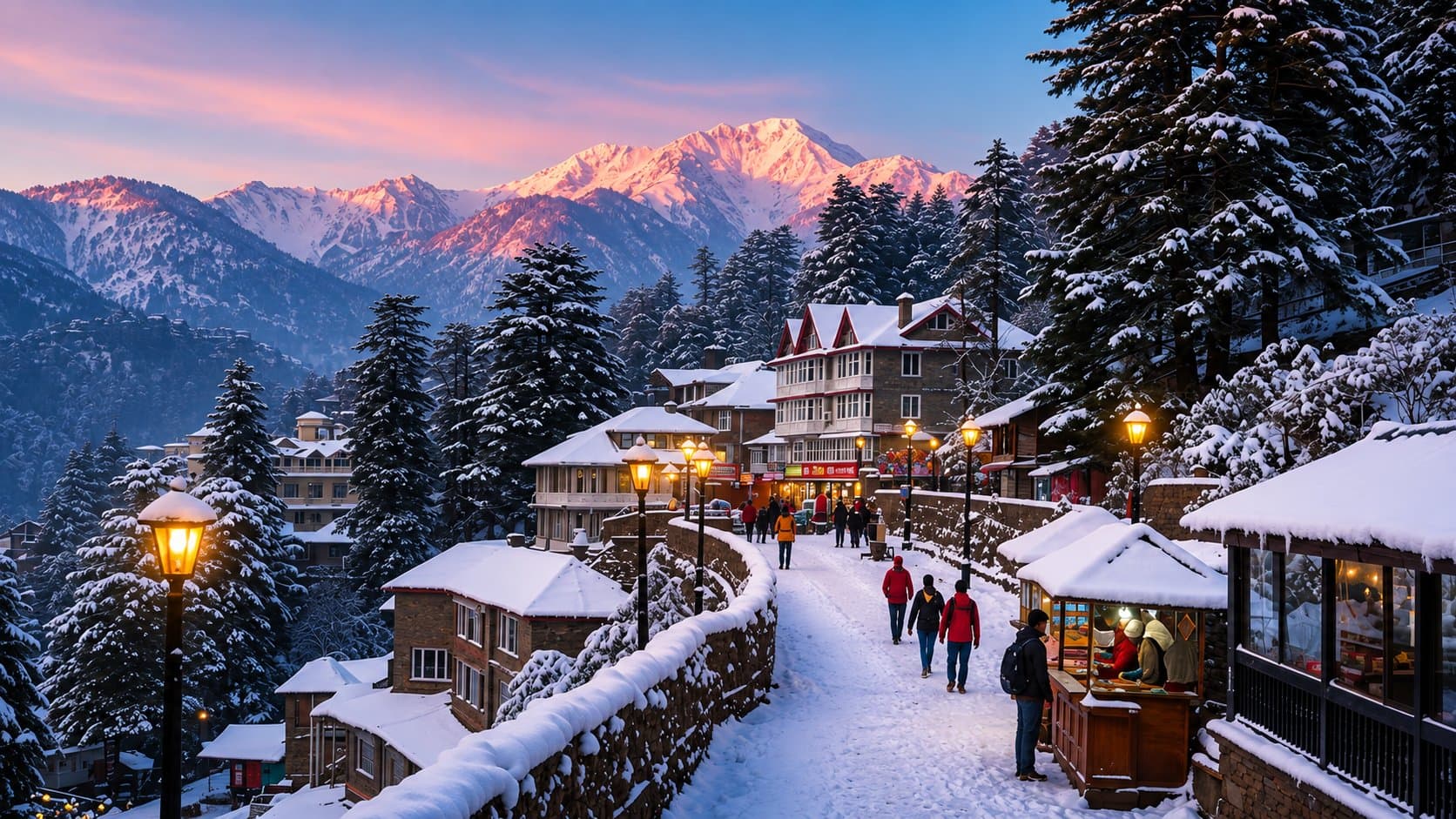
Himachal Pradesh has a problem most destinations don't: it's too varied to cover in one trip, and too varied to plan well without actually understanding how its pieces fit together. Shimla and Manali get most of the search traffic, but they're just two stops among a dozen genuinely distinct regions — Kinnaur's apple-and-Buddhist culture, the Tirthan and Sainj valleys' quiet riverside villages, Dharamshala's Tibetan community, Dalhousie's colonial hush, and Spiti's high-altitude cold desert all sit within the same state, each rewarding a trip for completely different reasons.
This guide works through Himachal region by region — what each place actually offers, how long it deserves, when to go, and how they combine into a realistic itinerary — rather than treating the state as one generic hill-station trip. Wherever we run an itinerary covering a specific region, we've linked to it; everywhere else, this guide stands on its own for planning the trip yourself.
Understanding Himachal Pradesh's Regions
Himachal splits naturally into a handful of regions, each with a different character and a different approach road:
Shimla and the central hills — the colonial-era capital and its easy day-trip neighbours (Kufri, Chail, Narkanda), reached via the Kalka–Shimla road or the heritage toy train.
Kullu-Manali Valley — Himachal's most-visited single destination, anchored by Manali, with Solang Valley and the Atal Tunnel as its adventure-sports extension toward Lahaul.
Kinnaur — a quieter, apple-orchard-and-Buddhist-monastery region further along the old Hindustan-Tibet road, built around Kalpa and the Sangla Valley.
Tirthan and Sainj valleys — river-and-forest valleys near the Great Himalayan National Park, genuinely different in pace from the state's more commercial hill stations.
Kangra Valley — home to Dharamshala, McLeodganj and Bir Billing, built around Tibetan culture and, in Bir's case, some of the world's best paragliding.
Chamba district — Dalhousie and Khajjiar, Himachal's quieter colonial-era hill stations, closer to Punjab than to the rest of the state.
Lahaul-Spiti — the high-altitude cold desert on the Tibetan plateau's edge, open only for a part of the year and genuinely unlike anywhere else covered in this guide.
Most first-time visitors pick one or two of these regions rather than attempting all of them in a single trip — and that's the right call. This guide is built so you can read just the sections relevant to your dates and interests.
Himachal Pradesh at a Glance
| Region | Known For | Ideal Trip Length | Distance from Delhi |
|---|
| Shimla & around | Colonial heritage, Mall Road, easy day trips | 2–3 days | ~7–9 hours by road |
| Manali & Kullu Valley | Adventure sports, Solang Valley, Old Manali | 3–4 days | ~10–12 hours by road |
| Kinnaur (Kalpa, Sangla) | Apple orchards, Kinner Kailash views, quiet villages | 5–6 days | ~12–14 hours by road |
| Tirthan & Sainj valleys | Rivers, trout, forest treks, homestays | 3–4 days | ~10–12 hours by road |
| Kangra (Dharamshala, Bir) | Tibetan culture, Triund trek, paragliding | 3 days | ~10–12 hours by road |
| Chamba (Dalhousie, Khajjiar) | Quiet colonial hills, meadow-and-forest landscape | 2–3 days | ~11–13 hours by road |
| Spiti Valley | Cold desert, monasteries, high-altitude landscape | 7–10 days | ~14–16 hours by road (seasonal) |
Which Himachal Region Fits Your Travel Style
First-time visitors wanting a broad introduction should default to a Shimla-plus-Manali trip, or our grand circuit if time allows — both give a representative sense of Himachal without requiring prior trekking experience or altitude acclimatisation.
Travellers prioritising quiet over sightseeing density are better served by Jibhi, Shangarh or Tirthan Valley than Manali or Shimla, all three of which stay genuinely crowded through peak season.
Couples and honeymooners tend to do well in Kinnaur (Kalpa, Sangla Valley) or Tirthan Valley — scenic, slower-paced, and noticeably less commercial than Manali's more family-and-group-heavy crowd.
Families with children generally find Shimla, Kufri and Manali the easiest base — established infrastructure, shorter travel days between sights, and activities (toy train, gondola-adjacent snow play at Kufri) that work well across age groups.
Adventure and trekking travellers should look toward McLeodganj (Triund), the Parvati Valley (Sar Pass) or the Kinnaur-Spiti crossover routes (Pin Bhaba Pass), depending on experience level — see the trekking table further down this guide.
Travellers short on leave days are best served by a single-region weekend trip — Shimla–Kufri–Chail or a 3-day Manali or Jibhi itinerary — rather than attempting a multi-region circuit that ends up mostly spent in transit.
Best Time to Visit Himachal Pradesh
| Season | Months | What to Expect | Best For |
|---|
| Spring | March–April | Mild days, orchards blossoming, thawing high-altitude roads | Shimla, Kullu Valley, lower-altitude sightseeing |
| Summer | May–June | Warm days, cool evenings, Himachal's busiest season | Escaping the plains' heat, families, Manali, Shimla |
| Monsoon | July–August | Heavy rain, landslide risk on hill roads | Best avoided for most regions; Spiti is a rain-shadow exception |
| Early Autumn | September | Clearing skies, thinning crowds, stable weather | Trekking, photography, Kinnaur and Spiti's final open weeks |
| Late Autumn | October–November | Crisp, clear, cold nights | Quiet sightseeing, apple harvest in Kinnaur |
| Winter | December–February | Snow in Shimla, Manali and Kufri; many high roads closed | Snow experiences, Gulmarg-style winter trips |
As a general rule: March to June and September to November are the two strongest windows for most of Himachal. Monsoon (July–August) is worth actively avoiding for hill-road travel given landslide risk, with the notable exception of Spiti, which sits in a rain shadow and is actually at its most accessible in July and August once high passes open. Winter brings snow to Shimla, Manali and Kufri — a genuine draw in its own right — but closes off Spiti and the higher Kinnaur villages entirely.
How to Reach Himachal Pradesh from Delhi
| Mode | Route | Approx. Duration | Best For |
|---|
| Overnight Volvo/private vehicle | Delhi → Chandigarh → hill destination | 10–14 hours depending on destination | Most of our itineraries — no lost working day |
| Flight | Delhi → Kullu (Bhuntar) or Shimla | 1–1.5 hours, plus local transfer | Manali/Kullu-bound trips with limited time |
| Train + road | Delhi → Kalka (train), then Kalka–Shimla toy train or road | 5–7 hours by train, variable onward | Travellers wanting the heritage toy train experience |
Overnight Volvo or private vehicle travel from Delhi is the most common route used across our own itineraries, since it saves a working day and gets you into the hills by early morning rather than losing a full day to a flight-plus-transfer. The Kalka–Shimla toy train, a UNESCO World Heritage mountain railway, is a worthwhile experience in its own right if you have the extra time and aren't in a rush.
Shimla: The Colonial Hill Capital
Shimla remains Himachal's most recognisable hill station — Mall Road, The Ridge, Christ Church and the old colonial-era architecture that made it the British Raj's summer capital. It's also the most accessible starting point for several of the regions covered below, which is why most multi-region Himachal circuits begin here. For a full season-by-season breakdown of when to visit specifically, see our Best Time to Visit Shimla guide, and for what to actually eat while you're there, our Shimla local food guide.
Kufri and Chail: Shimla's Easy Add-Ons
Kufri, a short drive from Shimla, adds snow-season activities and panoramic Himalayan views with minimal extra travel time — a near-mandatory stop on any Shimla-based itinerary. Chail, home to Chail Palace and one of the world's highest cricket grounds, offers a quieter, more forested alternative a little further out. Our Shimla • Kufri • Chail package covers all three as a compact 2-day/1-night weekend format, built specifically for travellers short on leave days.
Narkanda: Apple Country and Hatu Peak
Narkanda, roughly 65 km from Shimla, is Himachal's apple-orchard country — quieter and less commercialised than Shimla itself, built around Hatu Peak's viewpoint and temple, and Tanni Jubbar Lake. It works both as a standalone short trip and as a first stop on longer Kinnaur-bound circuits, since the road toward Kalpa and Sangla runs through it. Our Narkanda — Gateway to Apple Country package covers Hatu Peak, orchard walks and a Chail Palace excursion over 3 days/2 nights with a Swiss-tent stay, while our longer Baga Sarahan & Narkanda — Shiva Valley itinerary extends into trekking toward Bishnoi Top and a riverside camp near Shreekhand Mahadev over 5 days/4 nights.
Manali and the Kullu Valley
Manali is Himachal's single most-visited destination, and for good reason — it combines classic hill-station sightseeing (Hidimba Devi Temple, Vashisht's hot springs and temples) with genuine adventure-sports infrastructure that most of Himachal's other hill towns don't have. It's also the easiest Himachal destination to reach and the most commercially developed, which cuts both ways: excellent infrastructure and options, but also the state's heaviest tourist crowds in peak season. For a direct comparison against Shimla as a first Himachal destination, see our Shimla vs Manali guide.
Solang Valley, Atal Tunnel and Jana Village
Solang Valley, a short drive from Manali, is where most of the region's adventure activities concentrate — paragliding, zorbing and, in winter, basic skiing lessons. The Atal Tunnel, the world's longest highway tunnel above 10,000 feet, cut travel time to Lahaul dramatically and is itself now a popular day-trip destination for the drive and the views at either end. Jana Village adds a genuine homestay and rural Himachali-culture element to a Manali trip — a Himachali lunch, village walks and a noticeably slower pace than Manali town itself. Our Manali — A Gift of the Himalayas package (3 days/2 nights) covers Solang Valley, the Atal Tunnel and a Jana Village day trip, while Manali | Jana Village extends to 4 days/3 nights with an overnight Jana Village homestay built in.
Old Manali vs Mall Road Manali
A detail that trips up a lot of first-time visitors: "Manali" isn't one neighbourhood. Mall Road Manali is the commercial centre — hotels, shopping, restaurants, closer to the main sightseeing points. Old Manali, a short walk or drive across the river, has a noticeably different character — cafes, a backpacker-friendly pace, and closer proximity to Hidimba Temple and the start of several local walks. Neither is objectively better; it depends on whether you want convenience (Mall Road) or atmosphere (Old Manali), and many itineraries, including our own, build in time for both.
Kinnaur: Kalpa and the Kinner Kailash Range
Kinnaur sits along the old Hindustan-Tibet road, genuinely quieter and less commercially developed than the Kullu Valley, with a distinct Buddhist-and-Hindu cultural blend and some of Himachal's best apple orchards. Kalpa, the region's best-known stop, is built around sunset views of the Kinner Kailash range — considered one of the most striking mountain panoramas in Himachal, visible directly from the town rather than requiring a separate excursion. Our Kalpa package combines Narkanda with Kalpa over 6 days/5 nights, covering Kinner Kailash sunset views, the Narayan Nagini Temple, Suicide Point and a trek to Chaka Meadows.
Sangla Valley and Chitkul — India's Last Village
Sangla Valley, further along the Kinnaur road from Kalpa, centres on the Baspa River and the villages of Sangla, Batseri and Chitkul — the last inhabited village on this route before the road continues toward the Indo-Tibet border, and genuinely one of Himachal's most atmospheric, least-crowded stops. Batseri's Kamru Fort adds a historical layer to what's otherwise a landscape-and-village-walk destination. Our Sangla Valley package (5 days/4 nights) combines Narkanda with Sangla, Batseri, Kamru Fort and Chitkul, including a candle-night riverside dinner — and if you're planning around Holi specifically, our Sangla Valley Holi guide covers how the festival works in this part of Kinnaur.
Tirthan Valley: Rivers, Trout and the Jalori Pass
Tirthan Valley, near the Great Himalayan National Park, is one of Himachal's quieter riverside destinations — genuinely built around the Tirthan River itself, trout fishing, and access to the Jalori Pass trek toward Serolsar Lake, rather than a conventional hill-station sightseeing list. It's a strong pick for travellers who find Manali's crowds off-putting but still want a scenic, activity-friendly base. Our Tirthan Valley package (4 days/3 nights) is a riverside homestay itinerary covering the Choi Waterfall trek, the Jalori Pass–Serolsar Lake trek, and a Sarchi village visit with its Maa Durga Temple.
Jibhi: Himachal's "Mini Thailand"
Jibhi, a short distance from Tirthan Valley, has picked up a "mini Thailand" nickname for a specific waterfall viewpoint that's become a popular photo stop, but the village itself offers a genuinely calm, forested base with its own distinct character from both Manali and Tirthan. The Chehni Kothi, an ancient multi-storey wooden watchtower in a nearby village, adds a heritage stop most visitors don't expect from this part of Himachal. Our Jibhi Tirthan Valley package (3 days/2 nights) covers the Jibhi Waterfall, the "mini Thailand" viewpoint, the Jalori Pass–Serolsar Lake trek and Chehni Kothi.
Shangarh and the Sainj Valley
Shangarh, deeper into the Sainj Valley near the Great Himalayan National Park's boundary, is built around open alpine meadows and the Shangul Mahadev Temple — one of the quietest, least-commercialised stops covered in this guide, genuinely suited to travellers specifically seeking a slow, nature-focused trip over a sightseeing-heavy one. Our Shangarh Sainj Valley package (3 days/2 nights) covers the Shangarh Meadows, a trek to Pundrik Rishi Lake through rhododendron and deodar forest, and a waterfall visit.
Dharamshala and McLeodganj
McLeodganj, the upper part of Dharamshala, is the seat of the Tibetan government-in-exile and home to the Dalai Lama Temple — giving the town a genuinely distinct cultural character built around its Tibetan community, alongside Bhagsu Waterfall and the Bhagsu Nag Temple as its other core sightseeing. It's also the trailhead for one of Himachal's most popular beginner treks.
The Triund Trek
Triund, a roughly 7 km trek from McLeodganj, is one of Himachal's most accessible overnight treks — a single long day's walk (or a more relaxed two-day version) to a ridge with direct Dhauladhar range views, popular for overnight camping under genuinely clear mountain skies given the ridge's elevation above the valley haze. It's a strong first-trek choice for travellers without serious high-altitude experience. Our McLeodganj & Triund package (3 days/2 nights) combines McLeodganj's Tibetan-culture sightseeing with the Triund trek and overnight camping.
Bir Billing: Paragliding Capital of India
Bir Billing, in the wider Kangra district, has built an international reputation around one thing — it's widely regarded as one of the best paragliding sites in the world, with Billing serving as the launch point and Bir village as the landing ground. Tandem flights with certified pilots are available for first-timers, and the site's reliable thermals draw serious international pilots, not just tourists. Beyond paragliding, Bir's Tibetan colony (including the Chokling Monastery) and the surrounding Kangra tea gardens give the area a genuinely different pace for travellers who aren't flying. See our Bir Billing things-to-do guide for the full breakdown.
Dalhousie and Khajjiar
Dalhousie, in Chamba district, is one of Himachal's quieter colonial-era hill stations — closer to Punjab than to the rest of the state covered in this guide, which also makes it a popular add-on for travellers combining Himachal with an Amritsar visit. Khajjiar, a short drive away and often called the "Mini Switzerland of India," adds a genuinely distinctive meadow-ringed-by-forest landscape that's unlike anywhere else in this guide. Our Himachal Pradesh — Shimla, Manali, Dharamshala & Dalhousie package is the grand circuit covering both, alongside Shimla, Manali and McLeodganj, over 8 days/7 nights, ending with a Golden Temple sunrise darshan in Amritsar.
Spiti Valley: The Cold Desert
Spiti is genuinely unlike every other region in this guide — a high-altitude cold desert on the Tibetan plateau's edge, with a landscape, culture and climate that has more in common with Ladakh than with the green valleys covered above. It's open for a shorter window than the rest of Himachal (passes stay closed through winter and early spring) and requires real altitude awareness given its elevation. Our Spiti Valley road trip, route and permits guide covers the Shimla-vs-Manali route comparison, permit rules and altitude precautions in full, while our Spiti in June guide covers why June specifically is one of the strongest months to go, once the high passes have opened for the season.
Trekking in Himachal Pradesh
| Trek | Region | Altitude | Difficulty | Best Season |
|---|
| Triund | Dharamshala/McLeodganj | ~2,850 m | Easy (beginner-friendly) | March–June, September–November |
| Sar Pass | Parvati Valley (near Kasol) | ~4,200 m | Easy-to-moderate | May–October |
| Buran Ghati | Shimla district | ~4,500 m+ | Moderate-to-difficult | June–September |
| Pin Bhaba Pass | Kinnaur–Spiti crossover | ~4,900 m | Moderate-to-difficult | July–September |
| Jalori Pass–Serolsar Lake | Tirthan/Jibhi | ~3,100 m | Easy-to-moderate | April–November |
Triund is the strongest genuine first-trek choice in this list — short, well-marked, and reachable in a single long day. Sar Pass and the Jalori Pass–Serolsar Lake route both work for a fit beginner wanting a real high-altitude experience without the most demanding grading. Buran Ghati and Pin Bhaba Pass are better suited to trekkers with at least one prior high-altitude trek under their belt, given the exposure and altitude on their respective pass days. For the full route breakdown on any of these, see our dedicated guides: Pin Bhaba Pass, Buran Ghati and Sar Pass.
Himachal Pradesh Food: What to Actually Eat
Himachali dham — a traditional multi-course meal served on festive occasions, built around rice, dal, rajma and a rotating set of vegetable and lentil preparations, usually cooked by specialist bhatt/botis chefs — is the dish most worth actively seeking out rather than leaving to chance. It's traditionally served on large leaf plates at weddings and community events, but several restaurants in Shimla, Manali and Kullu now serve a tourist-accessible version worth asking for by name.
| Dish | What It Is | Best Found In |
|---|
| Himachali dham | Festive multi-course thali — rice, dal, rajma, rotating vegetable preparations | Shimla, Kullu, Mandi (restaurant versions widely available) |
| Siddu | Steamed, stuffed wheat bun — poppy seed, walnut or paneer filling | Manali, Kullu Valley, Kinnaur |
| Babru | A Himachali take on kachori, often paired with tamarind chutney | Shimla's Mall Road and local markets statewide |
| Trout | Fresh river trout, farmed along the Tirthan, Beas and other rivers | Tirthan Valley, Jibhi, Manali |
| Chana madra | A yoghurt-based chickpea curry, mild and distinctively Himachali | Shimla, Kullu, most sit-down local restaurants |
| Kullu-style trout fry | Simply spiced, pan-fried trout, a Kullu Valley specialty | Kullu, Manali's riverside restaurants |
See our Shimla local food guide for a fuller Mall Road-specific breakdown, including where to find good street snacks alongside sit-down dham.
What to Pack for Himachal Pradesh
| Region / Season | Essentials |
|---|
| Shimla, Manali, Dharamshala (spring/autumn) | Light layers for the day, a medium jacket for evenings, comfortable walking shoes |
| Summer (May–June) | Similar layering, plus a light rain layer for occasional pre-monsoon showers |
| Winter (December–February) — Shimla/Manali/Kufri | Heavy insulated jacket, thermal layers, waterproof boots with grip, gloves, warm cap |
| Kinnaur and Tirthan/Sainj valleys | Same as the relevant season above, plus an extra warm layer for evenings at higher-altitude towns like Kalpa |
| Spiti Valley | Serious cold-weather gear even in summer, strong sunscreen and sunglasses — nights stay cold year-round at this altitude |
| Trekking (any route in this guide) | Proper trekking shoes with ankle support, a rated sleeping bag if camping, a headlamp, layered clothing |
Himachal Pradesh for Honeymoons and Couples
Himachal is one of North India's most-booked honeymoon destinations, and for good reason — it offers a genuine range from classic hill-station romance (Shimla's Mall Road, Manali's Old Manali cafes) to quieter, more private settings (Kinnaur's Kalpa and Sangla Valley, Tirthan Valley's riverside homestays) depending on what kind of trip a couple actually wants. Manali remains the most-booked single destination for this, given its mix of scenic sightseeing and activity options, but couples specifically seeking privacy over activity density are generally better served by Kinnaur or Tirthan Valley, both of which stay noticeably quieter than the Kullu Valley through peak season.
Himachal Pradesh with Family and Kids
Shimla, Kufri and Manali are the most family-friendly base combination in this guide — established infrastructure, shorter travel days between sights, and a genuine range of activities that work across age groups, from the Kalka–Shimla toy train to Kufri's snow-season play areas and Manali's gentler Solang Valley activities. Longer, more remote circuits (Kinnaur, Spiti) are better suited to families with older children or teenagers comfortable with longer travel days, given the distances and, in Spiti's case, the altitude involved.
Shimla or Manali First? Choosing Your Starting Point
This is the single most common first-timer question for Himachal, and the honest answer is that it depends on what you're after more than which is objectively "better" — our Shimla vs Manali guide covers the full comparison, but as a quick summary: Shimla leans toward colonial heritage and easier day-trip add-ons (Kufri, Chail, Narkanda); Manali leans toward adventure sports and a younger, more backpacker-friendly scene (Solang Valley, Old Manali). Neither excludes the other — many longer circuits, including our own grand Himachal package, cover both.
Weekend Trip or Full Circuit? Choosing Your Trip Length
A 2-day/1-night Shimla–Kufri–Chail weekend and an 8-day/7-night grand circuit through five towns are both genuinely valid ways to experience Himachal — the right choice depends entirely on how much leave you have, not on one being a "better" trip than the other. Our Manali weekend vs full trip guide breaks down this exact trade-off for Manali specifically, and the same logic extends across the rest of the state's packages.
Sample Himachal Pradesh Itineraries
| Trip Length | Suggested Route | Best For |
|---|
| 2 days/1 night | Shimla, Kufri, Chail | Travellers short on leave days |
| 3 days/2 nights | Manali — Solang Valley, Atal Tunnel, Jana Village | A focused single-destination trip |
| 3 days/2 nights | Jibhi or Shangarh — waterfall, trek, village walks | Travellers prioritising quiet over sightseeing density |
| 5 days/4 nights | Narkanda to Sangla Valley or Kalpa (Kinnaur) | A deeper, less-crowded regional trip |
| 6 days/5 nights | Narkanda to Kalpa, with Chaka Meadows trek | Kinnaur with a trekking element |
| 8 days/7 nights | Shimla, Manali, Dharamshala/McLeodganj, Dalhousie, Amritsar | A comprehensive first Himachal trip |
What a Himachal Pradesh Trip Costs
Cost depends heavily on transport mode, stay category, season and which regions you're combining — our Himachal trip cost guide breaks down each of these levers in detail, and our Manali trip cost guide does the same specifically for Manali itineraries.
| Cost Driver | Lower-Cost Choice | Higher-Cost Choice |
|---|
| Transport | Overnight Volvo/shared transport from Delhi | Flight + private onward transfers |
| Season | Shoulder months (March–April, September–October) | Peak summer (May–June), Christmas–New Year |
| Stay category | Twin/triple-sharing standard hotels | Boutique or resort-category stays |
| Trip scope | Single-region trip (e.g. Manali only) | Multi-region circuit (e.g. the 8-day grand circuit) |
| Optional activities | Included sightseeing only | Paragliding, skiing lessons, adventure add-ons |
As a general pattern: overnight Volvo travel from Delhi keeps costs down versus flying, peak summer and the Christmas–New Year window carry the highest hotel rates, and longer circuits cost more overall simply due to length rather than a higher per-day rate. Every price on our site is a starting-from figure — share your dates and group size through our Custom Quote form for an exact number.
Common Mistakes to Avoid in Himachal Pradesh
Treating Himachal as one trip. The state's regions are genuinely different enough that trying to cover Shimla, Manali, Kinnaur and Spiti in one short trip usually means rushing all of them rather than properly experiencing any.
Ignoring monsoon road risk. July and August bring real landslide risk on hill roads across most of Himachal — worth actively planning around rather than assuming "it's just rain."
Underestimating Spiti's altitude. Spiti's elevation genuinely requires acclimatisation days and awareness of altitude sickness symptoms — don't treat it like a standard hill-station add-on.
Assuming Old Manali and Mall Road Manali are the same thing. They're a short distance apart but offer a noticeably different experience — worth deciding which fits your trip before booking a hotel in one or the other.
Skipping Kinnaur because it's "far." Kalpa and Sangla Valley are genuinely further from Delhi than Shimla or Manali, but the quieter pace and Kinner Kailash views are exactly what reward travellers willing to make that extra distance.
Frequently Asked Questions
What is the best time to visit Himachal Pradesh overall? March to June and September to November are the two strongest general windows — summer for pleasant weather and full accessibility, autumn for clearer skies and thinner crowds. Winter (December–February) is strong specifically for snow in Shimla, Manali and Kufri.
Should I visit Shimla or Manali first? Depends on what you want — Shimla for colonial heritage and easy day trips (Kufri, Chail, Narkanda), Manali for adventure sports and a younger scene. See our dedicated Shimla vs Manali comparison for the full breakdown.
How many days do I need for a Himachal trip? A weekend (2–3 days) covers a single destination like Shimla or Manali comfortably. 5–6 days suits a Kinnaur circuit (Narkanda to Kalpa or Sangla). 8 days covers a full multi-town circuit including Dharamshala and Dalhousie.
Is Kinnaur worth visiting if I've already done Manali? Yes — Kinnaur (Kalpa, Sangla Valley, Chitkul) is genuinely quieter and less commercially developed than the Kullu Valley, with a distinct apple-orchard-and-Buddhist-culture character and the Kinner Kailash range as its signature view.
What is Jibhi's "mini Thailand" waterfall? A specific waterfall viewpoint near Jibhi village that's become a popular photo stop and given the area its nickname — part of a broader Jibhi-Tirthan region known for quiet, riverside, forested stays away from Manali's crowds.
Is Chitkul really India's last village? It's the last inhabited village on this particular route through the Sangla Valley before the road continues toward the Indo-Tibet border — a genuinely remote, atmospheric stop and one of the most-requested parts of a Kinnaur itinerary.
What's the best trek for a beginner in Himachal? Triund, near McLeodganj, is the most accessible — a roughly 7 km route to a ridge campsite, reachable in a single long day, with direct Dhauladhar range views.
When is Spiti Valley open? Roughly June/July through September/October, depending on when the high passes clear of winter snow — it's genuinely closed off for a significant part of the year, unlike the rest of Himachal covered in this guide.
Can I combine Himachal with Amritsar? Yes — our grand Himachal circuit does exactly this, ending with a Golden Temple sunrise darshan in Amritsar after Shimla, Manali, Dharamshala and Dalhousie, since Dalhousie's location in Chamba district puts it within reasonable reach of Punjab.
Is Bir Billing only for paragliding? No — while it's internationally known for paragliding, Bir's Tibetan colony, monasteries and the surrounding Kangra tea gardens give it a genuinely worthwhile non-flying itinerary too.
What's the difference between Tirthan Valley and Jibhi? They're close together and often combined, but Tirthan centres more on the river itself and trout, while Jibhi has its own village character and the "mini Thailand" viewpoint — many travellers do both as part of the same trip.
Do I need a permit for Spiti Valley? Indian nationals don't need an Inner Line Permit for most of Spiti itself, though the route toward certain border-adjacent areas may require one — see our dedicated Spiti route and permits guide for current, area-specific rules.
What is Himachali dham? A traditional multi-course festive meal built around rice, dal, rajma and rotating vegetable and lentil preparations, cooked by specialist chefs — genuinely worth seeking out over a generic restaurant meal if you get the chance.
Is Dalhousie worth visiting separately from the rest of Himachal? It can be, given its closer proximity to Punjab, but it's most commonly combined with Khajjiar and the rest of a wider Himachal-to-Amritsar circuit rather than visited alone.
What is Khajjiar known as? The "Mini Switzerland of India" — a meadow ringed by dense forest near Dalhousie, with a genuinely distinctive landscape compared to the rest of Himachal.
Is Narkanda worth visiting on its own, or only as a stop toward Kinnaur? Both — it works as a standalone short trip for its apple orchards and Hatu Peak views, and as a natural first stop on the way to Kalpa or Sangla Valley.
What's the easiest way to reach Himachal from Delhi? Overnight Volvo or private vehicle is the most common route on our own itineraries, saving a working day versus flying and arranging onward transfers.
Is the Kalka–Shimla toy train worth doing? Yes, if you have the extra time — it's a UNESCO World Heritage mountain railway and a genuinely different experience from road travel, though it adds time versus a direct drive.
Which Himachal region is best for a quiet, non-touristy trip? Shangarh and the Sainj Valley, and to a slightly lesser extent Jibhi and the Tirthan Valley, are the quietest, least-commercialised options covered in this guide.
What should I pack for a winter Himachal trip? Heavy insulated jacket, thermal layers, waterproof boots with grip for icy patches, gloves and a warm cap — see the packing section above for region-specific detail.
Can solo female travellers do a Himachal trip comfortably? Yes — see our solo female travel and women-only groups guide for how women-only group departures work across our Himachal and other domestic itineraries.
What is the single best first-time Himachal itinerary? For most first-timers without a strong preference, our grand circuit (Shimla, Manali, Dharamshala/McLeodganj, Dalhousie, ending in Amritsar) gives the broadest, most representative introduction to the state in one trip.
Our Himachal Pradesh packages cover Shimla, Kufri & Chail, Narkanda, Manali, Manali with Jana Village, Kalpa, Sangla Valley, Tirthan Valley, Jibhi, Shangarh & Sainj Valley, McLeodganj & Triund, and the grand Shimla-Manali-Dharamshala-Dalhousie-Amritsar circuit. If you'd rather have an itinerary built around your specific dates and the regions that interest you — rather than piecing one together from the options above — get in touch and we'll help you plan it.