Himachal's food scene gets overshadowed by its scenery more than almost any other state we cover — travellers remember the mountains and forget that the state has a genuinely distinct cuisine of its own, shaped by altitude, climate and valley-by-valley isolation rather than one single "Himachali food" identity. A dish that's a Kullu Valley staple can be unheard of in Chamba, and what McLeodganj is actually known for eating has more to do with its Tibetan community than with Himachali cooking at all.
This guide works region by region rather than as one flat list, because that's genuinely how Himachali food works — and it's deliberately broader than our Shimla local food guide, which goes deep on Mall Road specifically. If Shimla is your only stop, start there. If you're covering more of the state, this is the fuller picture.
Himachali Dham: The Dish Worth Planning Around
If you only remember one dish from this guide, make it dham. It's a traditional multi-course vegetarian feast — rice, dal, rajma and a rotating set of vegetable and lentil preparations, traditionally served on a leaf plate at weddings and community festivals and cooked by specialist chefs called *botis*. Two dishes within it are worth knowing by name: madra, a rich, yoghurt-based chickpea (or sometimes kidney bean) curry cooked slow enough to lose most of its tang and turn genuinely creamy; and khatta, a tangy, tamarind-based preparation that balances madra's richness. Dham isn't something you can reliably order on demand — it's traditionally occasion-based — but a growing number of restaurants in Shimla, Kullu and Mandi now serve a tourist-accessible version worth specifically asking for by name rather than assuming it's on a standard menu.
Siddu: Himachal's Everyday Staple
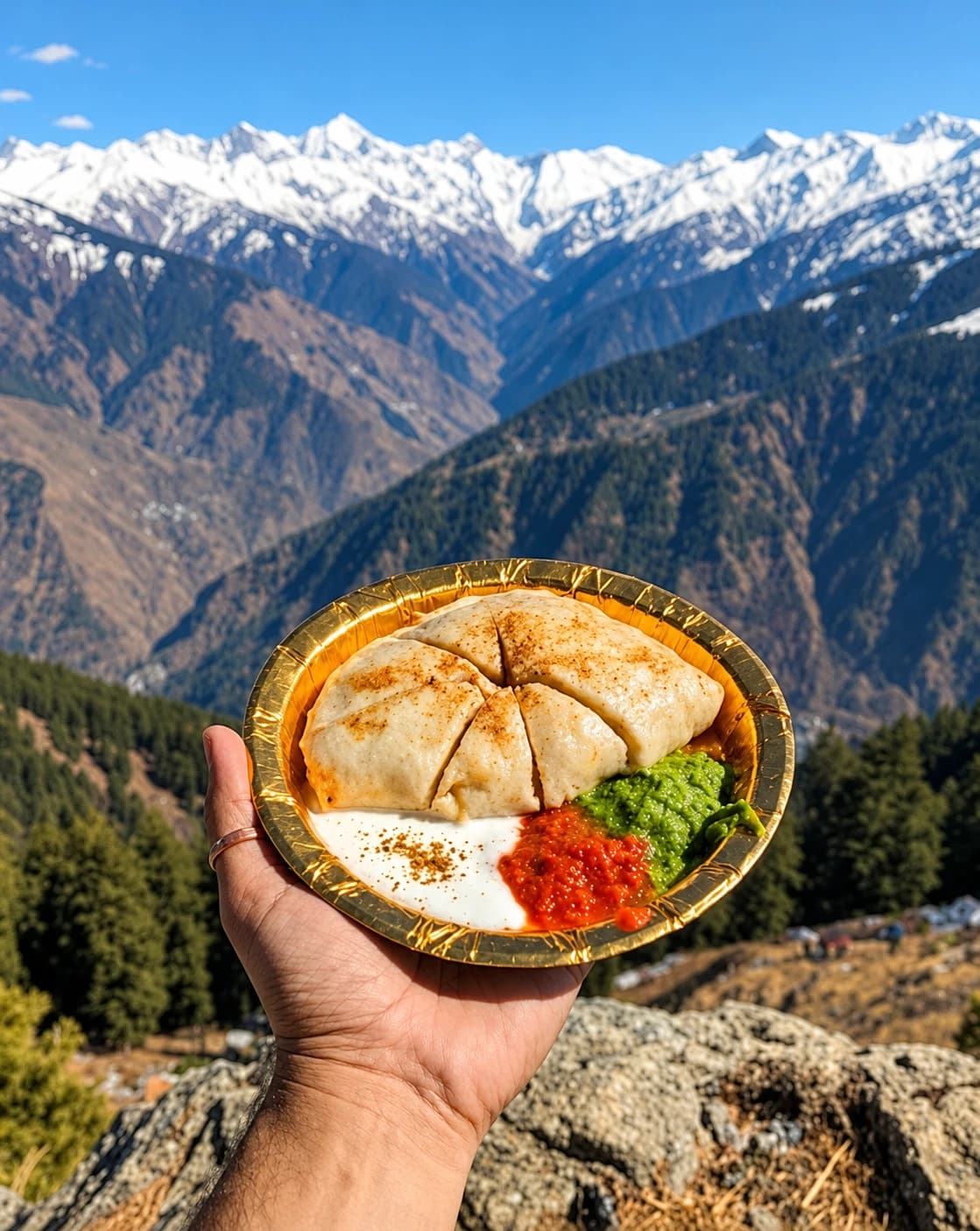
Siddu is the dish you'll actually encounter most often, because unlike dham it doesn't need an occasion. It's a steamed, stuffed wheat-flour bun — usually filled with walnut paste, poppy seed or a spiced potato mix — traditionally eaten with a spoon of ghee and a bowl of dal on the side. It's most associated with the Kullu Valley and Manali, though you'll find versions of it right across the state, and it's a genuinely good cold-weather meal given how it's served warm, straight off the steamer.
Babru: Himachal's Answer to Kachori
Less internationally known than siddu but just as locally loved, babru is Himachal's take on the kachori — a deep-fried, lentil-stuffed bread, usually paired with a tangy tamarind chutney. It's most common around Shimla's Mall Road and local markets statewide, and makes a good quick snack between sightseeing stops rather than a full sit-down meal.
Trout: The Kullu and Tirthan Valley Specialty
Himachal is one of the few Indian states where fresh river trout is a genuine, widely available local specialty rather than an imported luxury — the Tirthan, Beas and several other rivers support active trout farming, and simply spiced, pan-fried Kullu-style trout fry is worth seeking out specifically in the Kullu Valley, Manali and especially Tirthan Valley and Jibhi, where trout fishing is part of the area's actual identity, not just a menu item. Our Tirthan Valley and Jibhi Tirthan Valley packages both put you right in trout country.
Chana Madra: Dham's Everyday Cousin
Chana madra — the same yoghurt-based chickpea curry found in dham, but served on its own rather than as part of the full feast — is widely available at sit-down local restaurants across Shimla and Kullu even outside festival season, and is a good way to taste dham's signature flavour without needing to track down a full dham spread.
Chamba's Own Food Identity: Chukh, Aktori and Patande
Chamba district, in Himachal's northwest, has a food identity that's genuinely distinct from the rest of the state, and it's worth knowing about if your trip includes Dalhousie or Khajjiar. Chamba chukh is a fiery red chilli-and-garlic chutney — Chamba's own GI-tagged specialty, and a condiment locals take seriously enough that it's become a point of regional pride. Aktori is a savoury buckwheat pancake, and patande a sweeter wheat-flour pancake — both traditional Chamba dishes rarely seen outside the district. Our Himachal — Shimla, Manali, Dharamshala & Dalhousie grand circuit package includes Dalhousie as part of its 8-day route.
McLeodganj and Dharamshala: Tibetan Food, Not Himachali Food
This is the one genuine exception to "Himachali food" in this guide, and worth being upfront about: McLeodganj's food scene is built almost entirely around its Tibetan community, not traditional Himachali cuisine. Momos (steamed or fried dumplings), thukpa (a noodle soup, genuinely good on a cold evening) and thenthuk (a heartier, hand-pulled-noodle version of thukpa) are what the town is actually known for eating, and they're excellent — just don't expect dham or siddu to be the local specialty here the way they are further south in the Kullu Valley. Our McLeodganj & Triund package is built around exactly this part of Himachal.
Kangra Tea: A Genuine Local Product, Not a Gimmick
Kangra tea, grown around Palampur in the Kangra Valley, carries a Geographical Indication (GI) tag — a genuine, protected regional product rather than marketing language, with a lighter, more delicate character than the more famous Assam or Darjeeling teas. If your route passes through Kangra district (which several Dharamshala-area itineraries do), it's worth buying a packet directly from a local grower or shop rather than assuming it's the same as whatever "Himalayan tea" is sold more generically elsewhere.
Kinnaur: Buckwheat, Apples and a Cuisine Shaped by Altitude
Kinnaur's food is shaped more by its altitude and apple-orchard economy than by the rest of Himachal's valley cuisine. Buckwheat (locally *ogla*) preparations are a genuine dietary staple at Kinnaur's elevations, where wheat doesn't grow as easily, and Kinnauri rajma (a regional kidney-bean variety) is distinct enough from other Indian rajma that it's worth trying specifically here rather than assuming all rajma is the same. Kinnaur is also one of Himachal's major apple-growing regions, which shows up everywhere from fresh fruit stalls to apple-based preserves. Our Kalpa and Sangla Valley packages both put you in the heart of this region.
Himachal Food at a Glance
| Dish | What It Is | Where to Find It |
|---|
| Himachali dham | Festive multi-course thali with madra and khatta | Shimla, Kullu, Mandi (restaurant versions widely available) |
| Siddu | Steamed, stuffed wheat bun — walnut, poppy seed or potato filling | Kullu Valley, Manali, statewide in smaller towns |
| Babru | Lentil-stuffed, deep-fried bread, Himachal's take on kachori | Shimla's Mall Road and local markets statewide |
| Trout / Kullu-style trout fry | Fresh river trout, simply spiced and pan-fried | Tirthan Valley, Jibhi, Manali, Kullu |
| Chana madra | Yoghurt-based chickpea curry, dham's standalone cousin | Shimla, Kullu, most sit-down local restaurants |
| Chamba chukh | Fiery red chilli-garlic chutney, GI-tagged to Chamba district | Chamba, Dalhousie, Khajjiar |
| Aktori / patande | Savoury buckwheat pancake / sweet wheat pancake | Chamba district specifically |
| Momos / thukpa / thenthuk | Tibetan dumplings and noodle soups | McLeodganj, Dharamshala |
| Kangra tea | GI-tagged, lighter-bodied local tea | Palampur and the Kangra Valley |
| Kinnauri rajma / buckwheat | Regional kidney-bean variety; buckwheat staples at altitude | Kalpa, Sangla Valley, wider Kinnaur |
Where to Find Genuinely Local Food, Not Just Tourist Menus
The single most useful piece of advice we can give: Himachal's best dham, siddu and regional specialties are more often found in smaller, local-facing eateries a short walk off the main tourist strip than in the most visible restaurants on Mall Road or Old Manali's main lane. Ask your hotel, homestay host or driver for a specific recommendation rather than picking whichever restaurant has the most English-language signage — it's a small habit that consistently leads to better, more authentic meals across every region in this guide.
Frequently Asked Questions
What is the most famous Himachali dish? Himachali dham — a traditional multi-course vegetarian feast built around rice, dal, rajma, madra and khatta — is the dish most associated with the state, though it's traditionally occasion-based rather than always available on demand.
Is Himachali food spicy? Generally no, with the notable exception of Chamba chukh, a fiery chilli-garlic chutney specific to Chamba district — most Himachali dishes, including dham, madra and siddu, are mild compared to many other Indian regional cuisines.
What should I eat in McLeodganj? Tibetan food, not traditional Himachali dishes — momos, thukpa and thenthuk are what the town is genuinely known for, reflecting its Tibetan community rather than the Kullu Valley cuisine found further south.
Is Kangra tea different from Assam or Darjeeling tea? Yes — Kangra tea is a distinct, GI-tagged regional product with a lighter, more delicate character, grown specifically around Palampur in Himachal's Kangra Valley.
Where can I try real Himachali dham, not just a tourist version? Several restaurants in Shimla, Kullu and Mandi now serve a tourist-accessible version — ask for it by name, and ask your hotel or homestay host for a specific local recommendation rather than the most visible restaurant on the main road.
Is trout really a Himachal speciality? Yes, genuinely — the Tirthan, Beas and other rivers support active trout farming, making fresh, simply-spiced trout fry a real regional specialty in the Kullu Valley, Manali, Tirthan Valley and Jibhi, not an imported novelty.
What's different about Kinnaur's food compared to the rest of Himachal? Kinnaur's cuisine is shaped by altitude and its apple-orchard economy — buckwheat preparations and a distinct local rajma variety are more central here than the dham-and-siddu cuisine found in the Kullu Valley and further south.
Our Himachal Pradesh travel guide covers the full state region by region beyond food alone, or get in touch and tell us which regions you're covering — we'll help plan a route that doesn't miss the food that's actually worth travelling for.