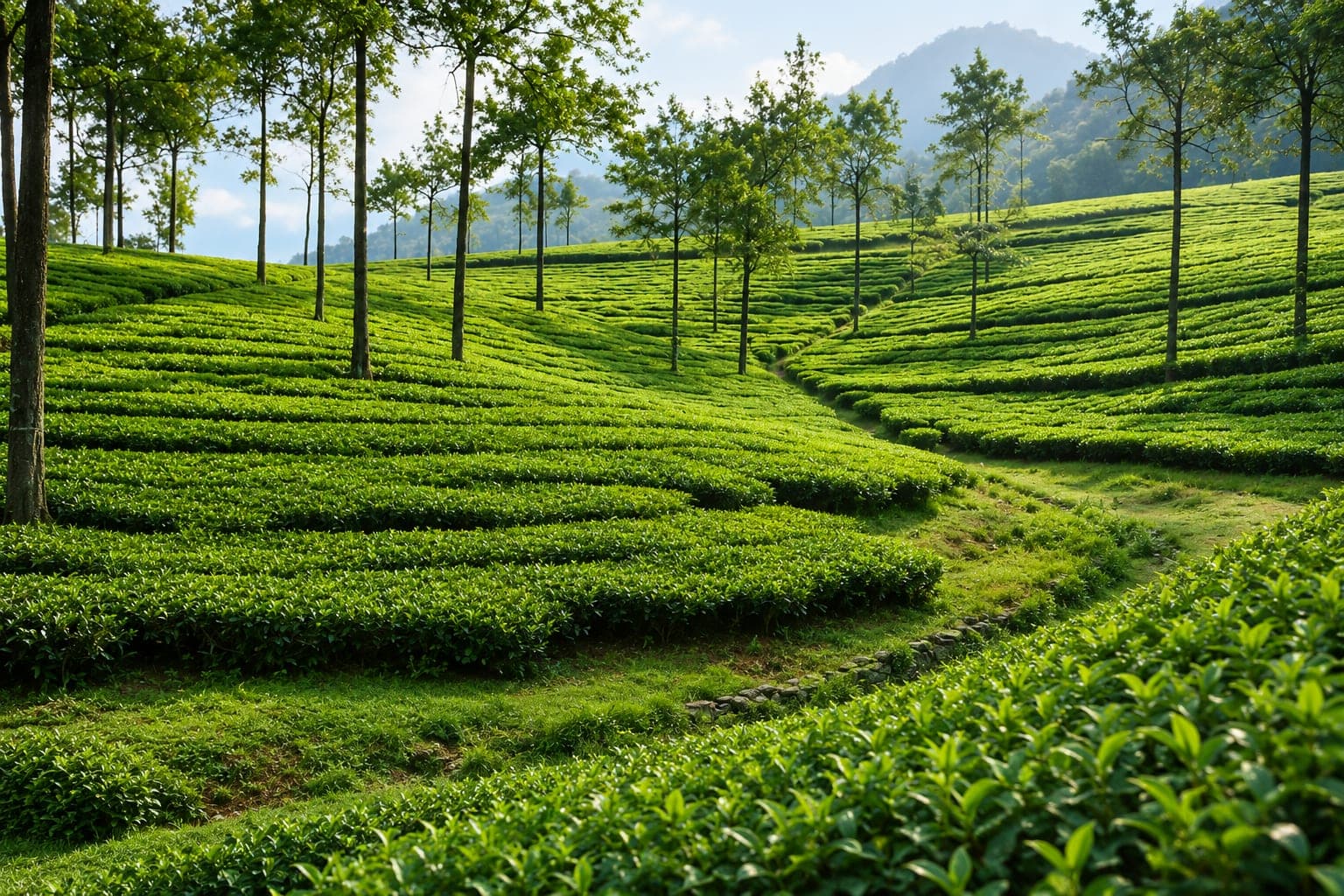
Munnar is the hill station almost every Kerala itinerary builds around, and for good reason — it's genuinely one of South India's most photogenic landscapes, with rolling tea gardens stretching across the hills as far as you can see. Here's what to know before you go.
Why Munnar Looks the Way It Does
Munnar's tea gardens aren't a natural landscape — they're the result of large-scale tea cultivation that began in the late 19th century under British planters, who found the high-altitude climate (Munnar sits at roughly 1,600 metres) ideal for tea. The Kannan Devan Hills Plantations that still operate today trace their roots to this colonial-era plantation economy, and the neatly manicured, undulating tea bush patterns you see across Munnar's hillsides are a direct result of over a century of continuous cultivation. Several estates run tea factory visits where you can see the processing from leaf to cup, a worthwhile add-on for most visitors.
Eravikulam National Park & the Nilgiri Tahr
Just outside Munnar, Eravikulam National Park is the most reliable place in the world to see the Nilgiri Tahr — a wild mountain goat species endemic to the Western Ghats and classified as endangered, found nowhere else on Earth outside this region's high-altitude grasslands. The park's Rajamalai section is set up for visitor access with a shuttle bus and a walking trail, and Tahr sightings here are considerably more reliable than most wildlife-viewing experiences, since the animals have grown accustomed to visitors in this specific zone.
One important planning note: Eravikulam National Park closes to visitors from February to early April each year for the Tahr's calving season — if you're planning a Munnar trip in this window, factor in that this particular stop won't be available.
Matupetty Dam, Kundala Lake & Top Station
Beyond the tea gardens and the national park, Munnar's standard sightseeing circuit covers a handful of other worthwhile stops: Matupetty Dam, known for its scenic viewpoint and occasional wild elephant sightings near the reservoir; Kundala Lake, a boating lake set among more tea estates; and Top Station, a viewpoint at the Tamil Nadu border offering some of the widest panoramic views in the region, named for its history as a transport point during the colonial tea trade.
Best Time to Visit Munnar
Munnar's high altitude keeps it cool year-round compared to Kerala's coastal towns, making it a genuinely comfortable hill station even in peak summer (March-May), when most of Kerala gets hot and humid. Winter (October to February) is the most popular season, with the clearest skies and most comfortable daytime temperatures for sightseeing. Monsoon (June-September) brings heavy rain and mist that can limit visibility at viewpoints like Top Station, though the tea gardens themselves turn a particularly vivid green during this period if misty, moody landscapes appeal to you more than clear long-distance views.
Planning Your Trip
Munnar features in all three of our Kerala circuits — the 5-day Munnar, Thekkady & Alleppey package, the 7-day Munnar, Thekkady, Alleppey & Kovalam package, and our flagship 8-day Enchanting Kerala Escapade — see each package page for the full itinerary and how Munnar fits into the wider circuit.
Frequently Asked Questions
Why are Munnar's tea gardens so famous? They're the result of large-scale tea cultivation dating to the late 19th century British colonial era, and the sheer scale and manicured appearance of the hillside plantations make Munnar one of South India's most photographed landscapes.
When is Eravikulam National Park closed? Roughly February to early April each year, for the Nilgiri Tahr's calving season.
Is the Nilgiri Tahr sighting guaranteed at Eravikulam? Sightings are considerably more reliable here than typical wildlife safaris, since the Rajamalai section's Tahr population is well habituated to visitors, though as with any wildlife viewing, nothing is ever 100% guaranteed.
What's the best time to visit Munnar? October to February for the clearest skies and most comfortable sightseeing; Munnar's altitude also keeps it pleasant even in Kerala's hot summer months, unlike the coastal towns.
Is Munnar a standalone destination or part of a bigger Kerala circuit? Most travellers, including on all three of our Kerala packages, combine Munnar with Thekkady and Alleppey (and sometimes Kovalam) rather than visiting Munnar alone.
Get in touch to plan your Munnar trip, or browse our Kerala tour packages to see how Munnar fits into each circuit.