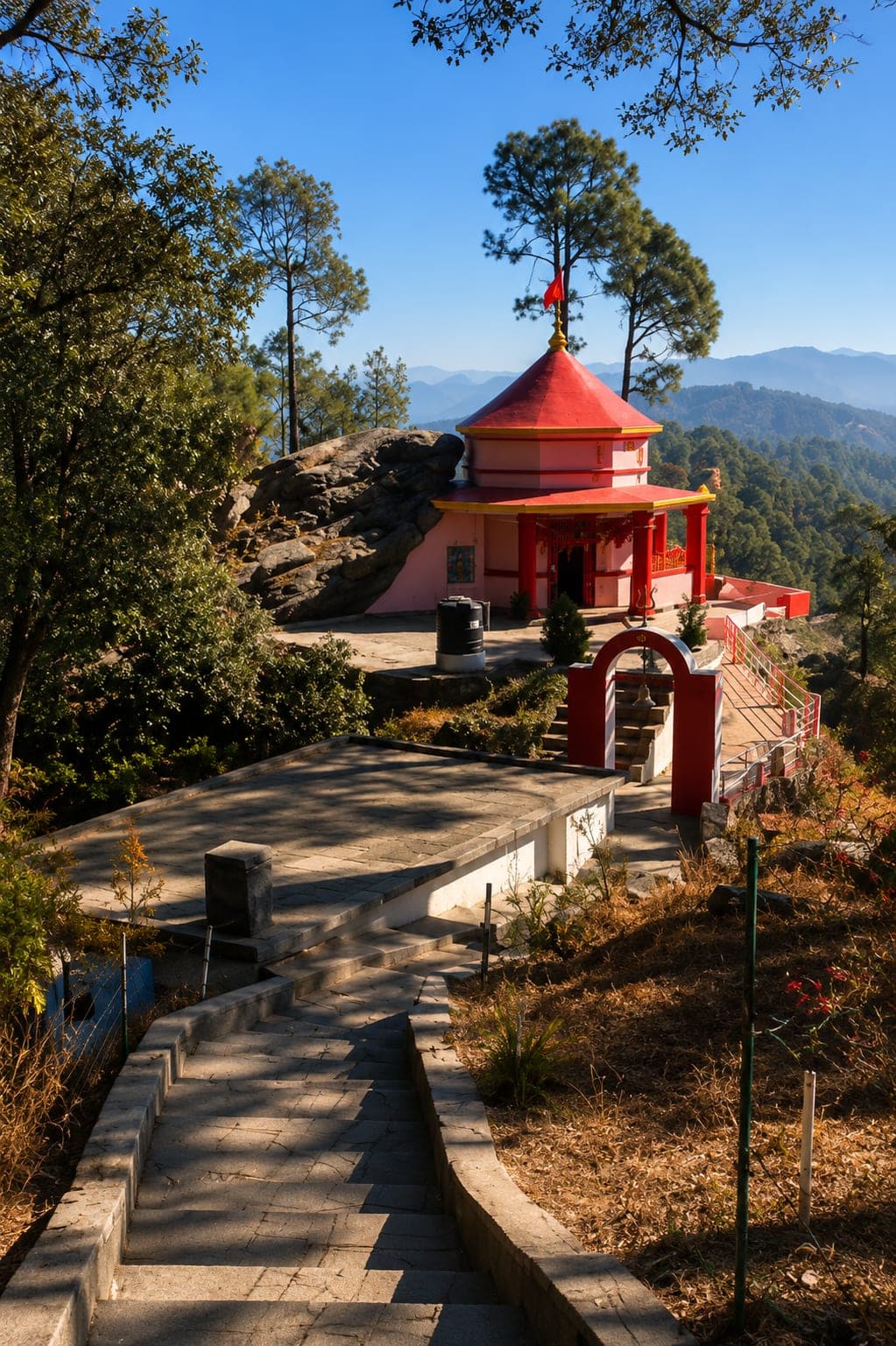
Kasar Devi is a small hillside settlement near Almora in Uttarakhand's Kumaon hills, and it carries a reputation unlike almost anywhere else on the Indian hill-station map — not built around grand sightseeing, but around a genuinely long, unusual history as a retreat for spiritual seekers, writers and quiet travellers. This guide goes beyond a simple places-to-visit list — for that shorter version, see our 6 Beautiful Places to Visit in Kasar Devi — and covers Kasar Devi's actual story, its temple, and everything worth building a proper trip around.
Where Is Kasar Devi?
Kasar Devi sits at roughly 1,900 metres, a short drive from Almora, one of Kumaon's older hill towns, in Uttarakhand. It's genuinely small — more a scattered hillside settlement than a conventional town — which is part of what gives it a noticeably quieter, slower character than Uttarakhand's busier, more commercial hill stations.
The Kasar Devi Temple
The temple itself, perched with wide valley and forest views, is the settlement's namesake and spiritual centre. It's dedicated to the goddess Kasar Devi, and unlike many pilgrimage stops built around quick darshan visits, a lot of visitors simply sit at the viewpoint near the temple for a while, taking in the view rather than treating it as a brief photo stop — which says something about the area's whole pace.
Crank's Ridge: Kasar Devi's Genuinely Unusual History
Kasar Devi's real distinction isn't scenery — plenty of Kumaon hillsides offer that — it's history. The area earned the nickname "Crank's Ridge" through a long-running reputation as a magnet for spiritual seekers, writers and travellers looking for something quieter and more contemplative than a conventional hill-station holiday. Local tradition holds that Swami Vivekananda meditated in this area in the 1890s, and by the mid-20th century the ridge had developed a genuine following among Western seekers and creatives drawn to its remoteness and reputed meditative atmosphere — a reputation that, in a low-key way, persists today in the area's handful of long-running cafes and guesthouses, which carry a noticeably different, more unhurried character than what you'd find in a typical commercial hill station.
The Reputed Geomagnetic Anomaly
Kasar Devi is also locally associated with a claimed geomagnetic anomaly in the area — a popular belief, sometimes informally linked to the Van Allen radiation belt, that's often cited as part of the area's "spiritual energy" reputation. Worth being upfront about: this is a widely repeated local claim rather than a scientifically established fact, and we'd rather tell you that honestly than oversell it as verified science. Whether or not you put any stock in it, it's a genuine, long-standing part of the area's folklore and part of why Kasar Devi became known as a meditation destination in the first place.
Jageshwar Dham: Kumaon's Great Temple Complex
A short drive from Kasar Devi, Jageshwar is a cluster of roughly 125 ancient stone temples dedicated to Shiva, set among deodar forest — one of Kumaon's most significant temple complexes, and a genuinely different atmosphere from visiting a single shrine. The sheer density of centuries-old stone temples in one forested setting makes it worth a proper, unhurried visit rather than a quick stop.
Binsar Wildlife Sanctuary
Binsar's oak and rhododendron forest, along with its own high-point Himalayan views from Zero Point, makes for a good half-day nature walk or light trek if you want to add wildlife-sanctuary time to a temple-and-meditation-focused itinerary. It's a genuinely good complement to Kasar Devi's quieter character rather than a jarring shift in pace.
Almora Town
Almora itself, a short drive from Kasar Devi, adds a proper Kumaoni market-town experience — worth an hour or two for local food and handicrafts if you're passing through, and a useful contrast to Kasar Devi's deliberately slower pace.
Kasar Devi's Cafe and Guesthouse Culture
The area's long-standing reputation among spiritual travellers and creatives shows up today in a handful of small cafes and guesthouses with a distinctly relaxed character — fewer polished resorts, more long-stay-friendly spots run with a genuinely unhurried pace. If you've come specifically for quiet rather than a packed sightseeing list, this is where you'll actually feel the difference from a conventional Kumaon hill station.
Best Time to Visit Kasar Devi
March through June and September through November offer the most comfortable weather for walking and sightseeing. Winter brings a genuine, quieter chill that some travellers specifically seek out — if the meditative, off-season atmosphere matters more to you than mild weather, a winter visit has its own appeal.
How to Reach Kasar Devi
Kasar Devi is reached via Almora, itself accessible by road from Kathgodam or Haldwani, both well connected by train from Delhi. Most itineraries combine the overland journey with the wider Kumaon circuit rather than treating Kasar Devi as a standalone fly-in destination.
A Sample Kasar Devi Itinerary
| Day | Plan |
|---|
| Day 1 | Arrive via Almora, check in, visit Kasar Devi Temple and the viewpoint |
| Day 2 | Jageshwar Dham's temple complex, Rudra Abhishek if timed right, return via Almora market |
| Day 3 | Binsar Wildlife Sanctuary trek to Zero Point, departure |
Planning Your Trip
Our Kasar Devi & Jageshwar package (3 days/2 nights) covers exactly this route — the temple, Jageshwar's 125 shrines and a Binsar Wildlife Sanctuary trek — from Delhi. If you want a more curated, wellness-themed version of the wider region with yoga, sound healing and a dedicated stargazing evening built in, see The Kumaon Self-Discovery instead, or our Best Places for Stargazing in India guide for how Kasar Devi fits into that wider picture.
Frequently Asked Questions
Why is Kasar Devi called Crank's Ridge? Through its long-running reputation as a magnet for spiritual seekers, writers and travellers seeking a quiet, contemplative retreat — a reputation that dates back at least to the mid-20th century and persists today in the area's small, unhurried cafes and guesthouses.
Is the Kasar Devi geomagnetic anomaly real? It's a widely repeated local claim rather than a scientifically established fact — worth knowing as part of the area's folklore and reputation, but not something we'd present as verified science.
Did Swami Vivekananda really meditate at Kasar Devi? Local tradition holds that he meditated in the area in the 1890s — it's a commonly repeated and long-standing claim tied to the area's spiritual reputation.
What is there to do near Kasar Devi? Jageshwar Dham's cluster of roughly 125 ancient Shiva temples, Binsar Wildlife Sanctuary's forest trek to Zero Point, and Almora town's local market, alongside Kasar Devi's own temple and cafe culture.
How many days do I need for a Kasar Devi trip? 3 days is enough to cover the temple, Jageshwar and a Binsar trek without rushing — our standard package runs exactly this length.
What is the best time to visit Kasar Devi? March to June and September to November for the most comfortable weather; winter for a quieter, more meditative atmosphere if you don't mind the cold.
How do I reach Kasar Devi from Delhi? Via Almora, itself reached by road from Kathgodam or Haldwani, both well connected by train from Delhi.
Is Kasar Devi good for a meditation or wellness retreat? Yes — its history, pace and small-scale guesthouse culture genuinely suit this kind of trip better than most Kumaon hill stations; see our Kumaon Self-Discovery package for a curated version with yoga and stargazing included.
Get in touch with your dates, or browse our best places to visit in Kumaon guide for how Kasar Devi fits into the wider region.