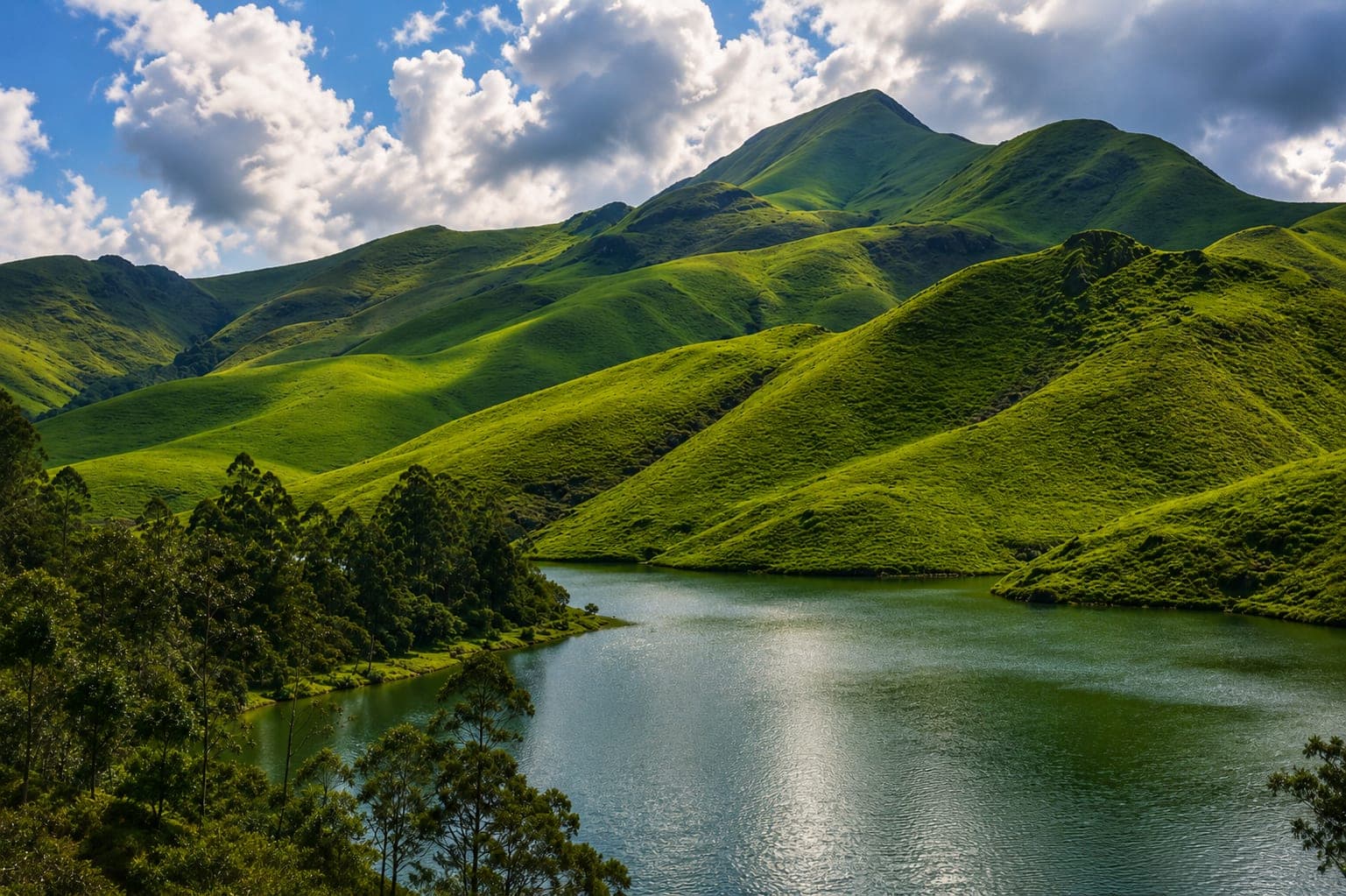
Kerala doesn't have one single "best month" the way snow destinations or desert circuits do — its hill, wildlife and backwater stops each respond to the season a little differently. Here's how the year breaks down for a Munnar-Thekkady-Alleppey circuit.
Winter (October to February): The Most Popular Season
This is peak season for good reason — Munnar's skies are clearest for tea garden views and Top Station's panoramas, Thekkady's weather is comfortable for the Periyar boat safari and spice plantation walks, and Alleppey's backwaters are pleasant for a houseboat or shikara cruise. If you want one straightforward answer, October to February is it, and it's also when demand (and accommodation prices) tend to be highest.
Summer (March to May): Hot on the Coast, Cool in the Hills
Alleppey and Kerala's coastal stretches get genuinely hot and humid from March onward, making extended outdoor time less comfortable. Munnar, however, sits at high altitude and stays notably cooler even through peak summer, making it a popular hill-station escape for South Indian travellers specifically during this window. If your itinerary leans more toward Munnar and less toward the coastal backwaters, late summer is more workable than you might expect.
Monsoon (June to September): Lush, but with Trade-offs
Kerala's monsoon is heavy and well-defined, running roughly June through September. The upside: the entire state turns a particularly vivid green, and this is genuinely when Kerala's "God's Own Country" branding feels most apt. The trade-offs: heavy, sustained rain can disrupt outdoor sightseeing, limit visibility at hill viewpoints, and occasionally affect houseboat operations in Alleppey during the heaviest spells. Many travellers specifically seek out Kerala in monsoon for Ayurvedic treatment packages, which are traditionally considered most effective during this humid season — but it's not the easiest season for a sightseeing-heavy itinerary.
A Key Planning Note: Eravikulam's Closure
If Munnar's Eravikulam National Park (home to the endangered Nilgiri Tahr) is a priority stop for you, note that it closes to visitors from February to early April each year for the Tahr's calving season — a narrow window that falls right at the tail end of the popular winter season, so it's worth checking current dates if you're planning a late-winter trip specifically around this stop.
Month-by-Month Summary
| Period | Munnar | Thekkady | Alleppey |
|---|
| October-February | Best — clear skies, cool | Comfortable safari weather | Pleasant backwater cruising |
| March-May | Still cool, pleasant | Hot but better wildlife sighting odds | Hot, humid |
| June-September | Lush but rainy, limited views | Rain can affect safari | Lush, but houseboat disruption risk |
Planning Your Trip
Our Kerala circuits — the 5-day Munnar, Thekkady & Alleppey package, the 7-day Munnar, Thekkady, Alleppey & Kovalam package, and our flagship Enchanting Kerala Escapade — all run across the open season; see each package page for details.
Frequently Asked Questions
What is the single best month to visit Kerala's Munnar-Thekkady-Alleppey circuit? Any month from October to February — the most comfortable and clearest weather across all three destinations.
Is Munnar comfortable to visit in summer? Yes, relatively — its high altitude keeps it noticeably cooler than Kerala's coastal stretches even in peak summer (March-May), making it a popular hill-station escape during this period.
Should I avoid Kerala during monsoon? Not necessarily — monsoon (June-September) brings Kerala's most vivid greenery and is a traditional season for Ayurvedic treatment, but heavy rain can disrupt sightseeing and occasionally affect houseboat operations.
When is Eravikulam National Park closed? Roughly February to early April each year, for the Nilgiri Tahr's calving season — worth checking if this is a priority stop on a late-winter trip.
Does the Alleppey backwater cruise run year-round? Generally yes, though the heaviest monsoon spells (June-September) can occasionally disrupt houseboat operations.
Get in touch to plan your Kerala trip for the right season, or browse our Kerala tour packages.