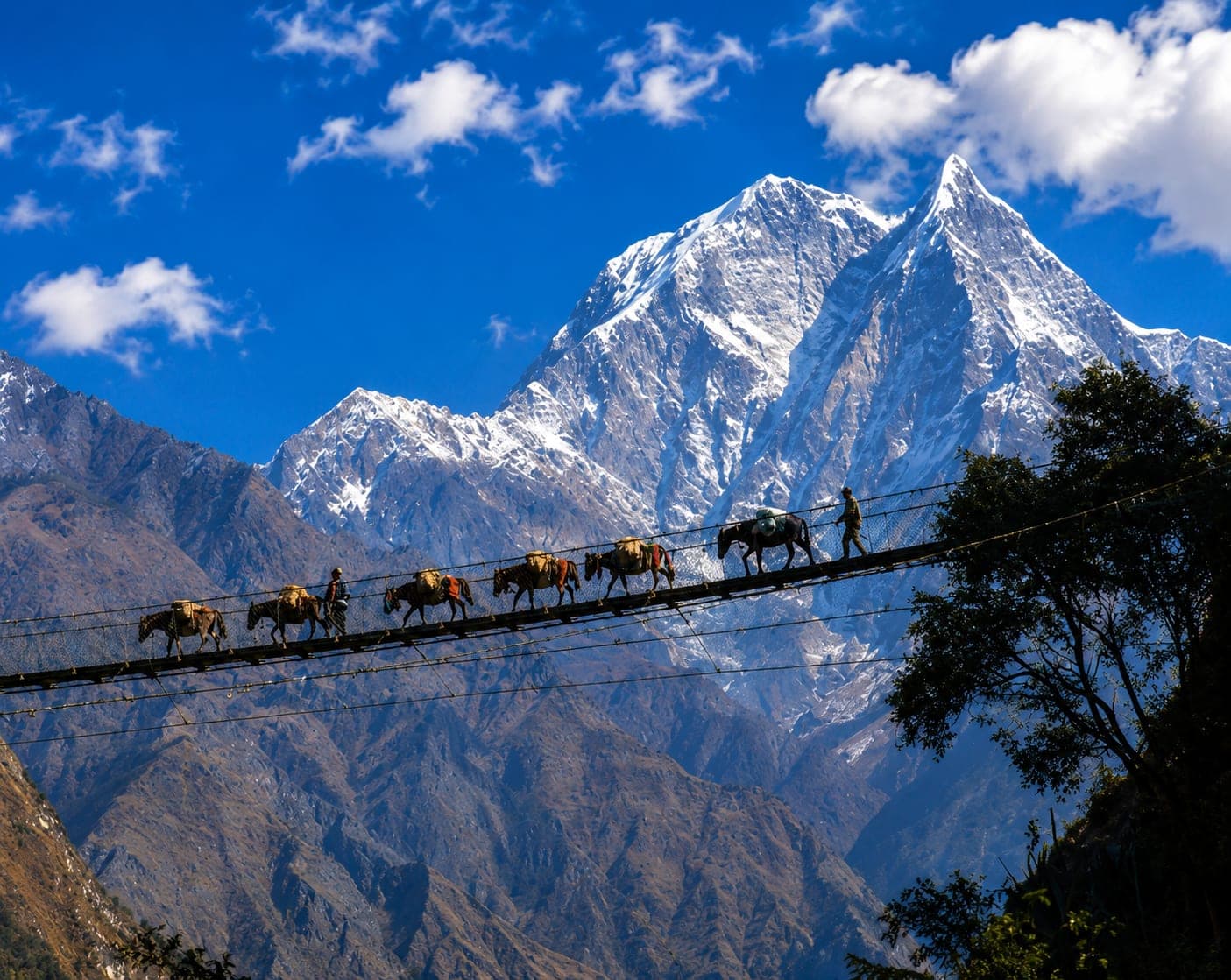
Nepal is one of the easiest international trips for Indian travellers to plan, largely because of one fact that surprises first-timers: you don't need a visa or even a passport to enter, provided you carry a valid alternative ID. That single detail changes how quickly this trip can come together.
Visa and Entry Rules for Indian Citizens
Indian nationals can enter Nepal without a visa, using either a passport or a government-issued photo ID (voter ID or Aadhaar card, though a passport is the more reliable and widely accepted option, especially for flights). There's no visa fee, no advance application, and no processing wait — which makes Nepal genuinely last-minute-friendly compared to most other international destinations. That said, always carry your passport if flying, since some airlines and immigration counters prefer it even though it isn't strictly mandatory by treaty.
Kathmandu vs Pokhara: What Each Offers
Kathmandu is Nepal's cultural and historical core — Pashupatinath Temple, Swayambhunath (the Monkey Temple), Boudhanath Stupa, and the old Durbar Squares. It's dense, busy, and best explored over 2-3 days without rushing between UNESCO sites.
Pokhara, about 200 km west (roughly 25-30 minutes by flight, or 6-7 hours by road), is where the pace slows down — set against the Annapurna range, with Phewa Lake, paragliding, and it's the jumping-off point for shorter treks like Poon Hill for those who want mountain views without a multi-day expedition.
Most itineraries split roughly evenly between the two: cultural depth in Kathmandu, mountain scenery and a slower pace in Pokhara.
Should You Add a Trek?
If you have the extra days and reasonable fitness, the Poon Hill trek (typically 4-5 days round trip from Pokhara) is the most accessible option, offering Annapurna and Dhaulagiri views without technical climbing. For a first Nepal trip on a standard week-long schedule, this is usually the trek to consider adding rather than the longer Everest Base Camp or Annapurna Circuit routes, which need significantly more time and preparation.
Best Time to Visit Nepal
October to November and March to April are the two strongest windows — clear mountain views, comfortable temperatures, and stable weather for both sightseeing and trekking. December to February is cold, especially at altitude, but still workable for Kathmandu and Pokhara if trekking isn't the priority. June to September is monsoon season, with frequent rain and clouded mountain views, generally best avoided unless trekking isn't part of the plan.
Getting There
Direct flights connect Delhi to Kathmandu in roughly 1.5-2 hours, making it one of the more convenient international short-haul options available. Land border crossings from India (via Sunauli or Raxaul) are also possible but add significant travel time and are better suited to overland travellers than a standard week-long holiday.
A Realistic 6-Day Itinerary
Day 1: Arrive Kathmandu, settle in. Day 2-3: Kathmandu sightseeing (Durbar Square, Pashupatinath, Boudhanath, Swayambhunath). Day 4: Fly or drive to Pokhara. Day 5: Phewa Lake, paragliding or a short Sarangkot sunrise hike. Day 6: Return flight to Kathmandu, connect back to Delhi.
If you'd like a Nepal itinerary built around your dates, with or without a trek included, get in touch and we'll put it together.